



The Unseen Weight of a Single Word
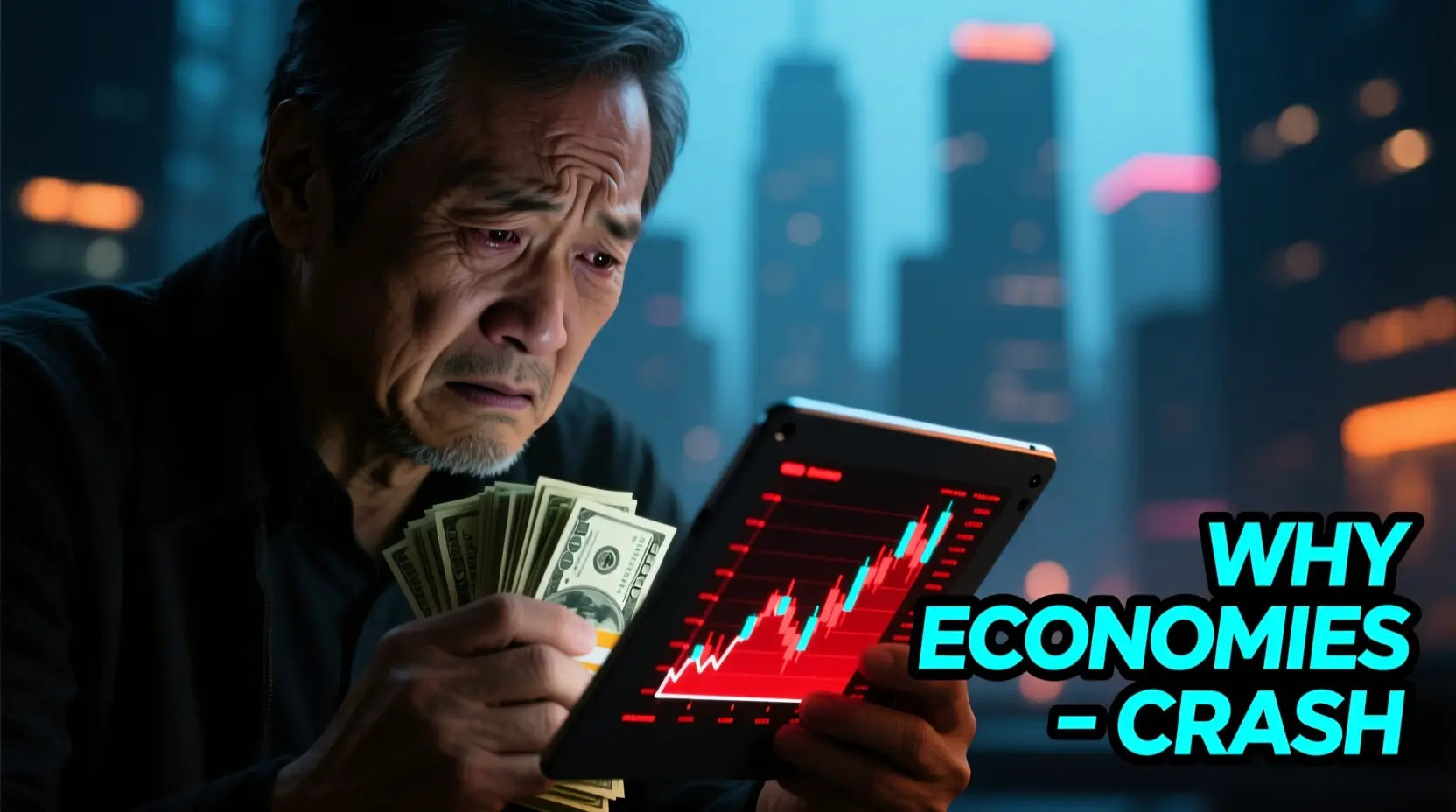
The word “recession” carries a weight that makes headlines jump and investors panic, yet for most people, the reasons behind it can feel like a black box, a complex and shadowy mechanism that churns out bad news from a place we can’t see. We feel its effects—the unease at the water cooler, the tighter grip on the wallet, the closed-down storefronts on Main Street—but the inner workings remain a mystery. At its core, a recession is a significant decline in economic activity, lasting more than a few months, usually visible across metrics like GDP, employment, and production. But what actually causes an economy, this vast, interconnected system, to tip from growth into this state of contraction? It’s not a single switch being flipped, but rather a series of dominoes, each one leaning on the next, until the whole line begins to fall.
The Engine of Everything: When People Stop Spending
If you had to point to one single heartbeat of the economy, it would be the consumer. People are the engines of the economy, and when households, for any number of reasons, start saving aggressively or cutting back on purchases due to fear, uncertainty, or lower income, a fundamental gear grinds to a halt. Think about it: when you decide to postpone buying a new car, or skip the weekend restaurant trip, or hold onto your old phone for another year, that decision, in isolation, means nothing. But when millions of people make that same decision at the same time, the collective impact is a seismic shock.
Businesses, from the local bakery to the multinational automaker, suddenly sell less. Their profits shrink, their growth plans are shelved, and their need for staff diminishes. Layoffs often follow. And here’s where the ripple effect begins—a single stone creating waves across the entire pond. Less spending leads to lower production, which leads to fewer jobs, which further reduces the overall amount of money people have to spend, which in turn leads to even less spending. It’s a vicious, self-reinforcing cycle. The fear of a downturn can actually create the very downturn people were afraid of. This isn’t just theory; it’s a story that has played out time and again, where consumer confidence, that fragile and intangible feeling, becomes the most important economic indicator of all.
The House of Cards: Financial Shocks and Shattered Confidence
Another key driver is a financial shock. This could be anything from a sudden stock market crash, a banking crisis, or the burst of an asset bubble—when the price of something, like tech stocks or houses, gets driven up to unsustainable heights based purely on speculation. For a while, everyone feels richer. People borrow against their newfound, paper wealth. Companies invest in ambitious new projects. The music is playing, and everyone is dancing.
Then, something shifts. A few savvy investors cash out. A major company fails. The belief that prices can only go up evaporates. And when the value of investments drops drastically, the house of cards begins to tremble. Companies lose capital and cancel projects. Consumers see their wealth—their retirement funds, their home’s value—diminish, sometimes overnight. The psychological blow is as powerful as the financial one. The feeling of security is replaced by a scramble for safety.
Credit, the lifeblood of a modern economy, tightens dramatically. Banks, scared of losses, stop lending so easily. Borrowing for a new business, a car, or a home becomes slow, difficult, or impossibly expensive. Economic activity contracts as the flow of money seizes up. Think of the housing bubble burst in two thousand eight—it wasn’t just a housing problem; it wasn’t just about foreclosures. It sent waves through the global financial system because those mortgages had been bundled into complex investments held by banks and institutions worldwide. When the underlying asset (the house) lost value, the entire intricate web of bets and loans started to unravel, proving that in our connected world, a shock in one corner of finance can bring the whole structure to its knees.
The Double-Edged Sword: Inflation and Deflation
Inflation and deflation, two sides of the same dangerous coin, also play crucial roles in tipping the economic scales. High inflation, which we often think of as prices rising, is more accurately described as your money’s purchasing power being eroded. It’s a silent thief. Your paycheck buys less at the grocery store, fills your gas tank only partway, and makes that monthly utility bill a source of stress. When this happens, consumers and businesses are forced to cut back on everything else. Discretionary spending is the first to go—no new clothes, no family vacations, no upgrading the office furniture. This sudden pullback in non-essential spending is enough to stall an economy, as all those industries reliant on our “extra” money begin to suffer.
Conversely, deflation, where prices fall across the board, sounds like a good thing on the surface. Who wouldn’t want things to be cheaper? But it creates a perverse psychological incentive that can be even more damaging. If you believe a car, a refrigerator, or a new computer will be significantly cheaper in six months, why would you buy it today? You delay. You wait. And when everyone waits, collective demand plummets. Businesses, unable to sell their products, are forced to slash prices even further, cut wages, and lay off workers, which only reinforces the cycle as people have even less money to spend. It’s an economic trap that is notoriously difficult to escape. Central banks try to manage these wild swings with interest rates—raising them to cool inflation, lowering them to spur spending during deflationary fears—but sometimes the timing or magnitude of these interventions is a step behind, like trying to steer a massive ship through a sudden storm; the response is slow, and sometimes it isn’t enough to prevent a slowdown.
The Hand on the Tiller: The Role of Government Policy
Government policy, or the lack thereof, can be a steadying hand or a sudden shove, influencing the likelihood of a recession. Think of the government as the crew of that ship in the storm. Their actions matter immensely. Excessive national debt can force a government to raise taxes or abruptly cut public spending—on infrastructure, on education, on social programs—which directly reduces overall demand in the economy. Suddenly, there are fewer public works projects employing people, and citizens have less take-home pay. Similarly, sudden regulatory changes can create uncertainty, causing businesses to freeze their investment plans until the new rules are clear.
On the flip side, overly loose policies—like extremely cheap credit for too long—can be just as dangerous. When money is practically free to borrow, it can inflate bubbles in assets like housing or stocks, encouraging risky behavior and investment mistakes that would never happen in a normal cost environment. It encourages malinvestment—building houses in places no one really wants to live, or funding business ventures that were never truly viable. These bubbles, artificially inflated by policy, don’t gently deflate; they burst, dragging the economy down with them. It’s a delicate balancing act, where doing too much or too little, or acting at the wrong time, can have profound consequences for everyone.
A World of Ripples: The Global Domino Effect
In our modern age, no economy is an island. Global events are another critical piece of the recession puzzle, acting as sparks that can ignite a global slowdown. Trade wars, where countries impose tariffs on each other’s goods, make products more expensive for everyone and disrupt long-established supply chains. Geopolitical conflicts can send the price of essential commodities like oil skyrocketing, which acts like a tax on every consumer and business.
Pandemics, as we have recently witnessed, are the ultimate example of a global shock. They force a sudden, simultaneous halt to large swathes of economic activity—travel, hospitality, entertainment—while also causing profound supply chain disruptions as factories close and shipping lanes are interrupted. When countries are so deeply interlinked financially and commercially, a problem in one region, like a banking crisis in the United States or a manufacturing halt in East Asia, doesn’t stay contained. It transmits quickly to another, amplifying the recessionary effects worldwide in a matter of days, not years. The global economy is a network, and a shock in one node can bring strain, or even failure, to all the others.
The Inevitable Rhythm: Cycles and Corrections
It’s also important to note that recessions, for all their pain, are a natural part of the economic cycle. Economies don’t grow in a straight, endless line upward. They expand and contract in phases, much like the seasons. Periods of rapid, exuberant growth, often called booms, often contain the very seeds of the next slowdown. This is what economists call “overheating”—where demand races so far ahead of supply that it leads to rampant inflation and widespread investment mistakes. During a boom, optimism is high, and money flows into projects and assets of increasingly questionable value.
This overheating is unsustainable. The mistakes are eventually revealed. The overvalued assets find their true price. The economy must then correct itself, washing out the excesses of the previous boom. This contraction, while painful, is a necessary process of purging the system of its imbalances. It’s a period of recalibration, where resources are reallocated from failing, inefficient ventures to newer, more productive ones. It’s the economy’s way of catching its breath and preparing for the next phase of sustainable growth.
Putting the Pieces Together
In short, recessions rarely have a single, neat cause. They aren’t born from one mistake or one event. Instead, they emerge from a complex and often messy combination of consumer behavior, financial instability, inflationary pressures, policy decisions, and global events. One factor often exacerbates another: a global oil shock fuels inflation, which causes consumers to pull back spending, which exposes the weaknesses in an over-leveraged financial system, which is then mishandled by panicked policymakers.
Understanding these interlocking factors helps us not just predict downturns, but also prepare for them. For individuals, it means building emergency savings and managing debt wisely. For businesses, it means fostering resilience and avoiding over-expansion during the good times. For governments, it means having the tools and the wisdom to intervene effectively without making the situation worse. While a recession can be a challenging, often frightening time, recognizing its underlying mechanisms gives governments, businesses, and individuals a roadmap to respond, adapt, and eventually recover. The recovery, too, is a process—a rebuilding of confidence, a restoration of balance, and a slow, steady return to growth.
Economics isn’t magic—it’s patterns, incentives, and human behavior amplified through money. It’s the story of what we do when we’re hopeful and what we do when we’re scared. A recession is essentially the economy signaling that something is out of balance, that the rhythm has been broken. The sooner we recognize the signs—the pullback in spending, the credit bubble, the global shock—the sooner we can act to restore equilibrium. It is this understanding, this collective awareness, that can prevent small, manageable contractions from turning into deep, long-lasting, full-blown crises. It reminds us that the economy, for all its charts and data, is ultimately a human institution, reflecting our best and worst instincts back at us.