






The Overlooked Threat That Could Derail Your XRP Fortune (And How to Fortify It)
Every XRP holder I know is buzzing with anticipation for the next bull run. The air is thick with talk of price predictions, market cycles, and life-changing gains. But amidst this collective excitement, I noticed a critical conversation was missing. Almost no one was talking about a hidden, legal threat that could wreck those hard-won profits.
I always operated under a simple assumption: if I kept my crypto safe in my own wallet and waited for the moon, I would be set. I believed I had covered all the bases. But the truth is, I was overlooking something monumental. When I finally discovered the scope of this oversight, it felt like a gut punch.
Let me share what I’ve learned, because this might be the most important financial realization I’ve ever had.
The Morning That Changed Everything
It started like any other day. I was scrolling through crypto news, sipping my morning tea (yes, I’m a tea guy), when a headline stopped me cold: “Expert Says This Is About to Become Very Important for Every XRP Holder to Understand.”
Naturally, I clicked. The article featured a crypto wealth advisor named Jake Claver, who was raising a serious red flag for retail investors like us. His warning hit me with the force of a ton of bricks.
He laid out a simple, terrifying premise: if you hold your XRP the way most of us do, you could be leaving yourself wide open to legal and financial disasters without even realizing it.
The Legal Pitfall: When “Your Keys” Aren’t Really Yours
He began by explaining a seemingly dry piece of history. Back in 2014, the IRS decided to classify cryptocurrency as property. It sounds bureaucratic and boring, but this single decision has profound implications.
When crypto became “property” in the eyes of the law, all the legal frameworks that apply to things like houses, stocks, and real estate suddenly applied to our XRP. In theory, this gave us access to the same tools the wealthy use to protect their assets—trusts, LLCs, and sophisticated estate plans.
The crazy part? Most of us never got the memo. We kept treating our crypto like a digital collectible instead of a serious financial asset.
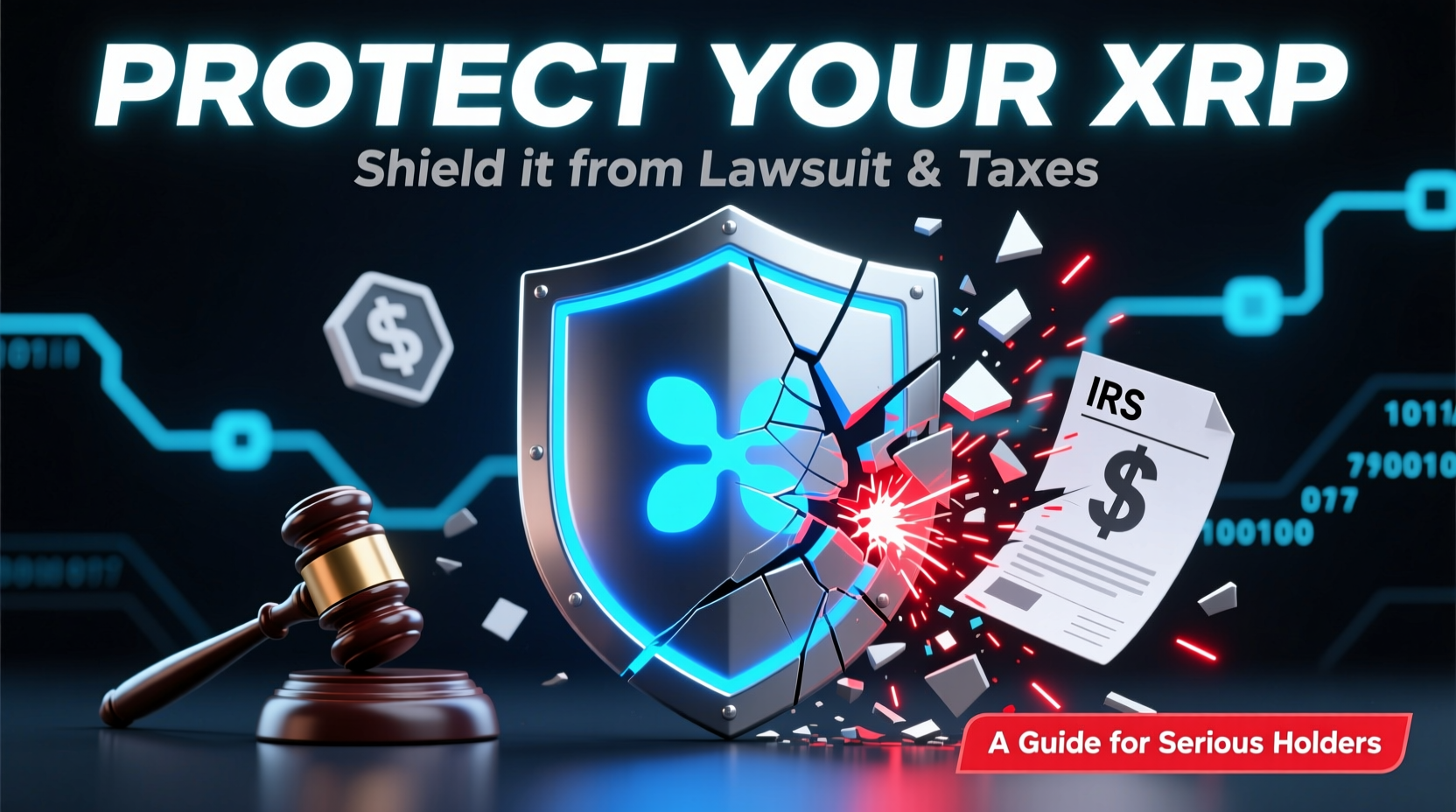
Then came the real eye-opener. Claver pointed out that crypto held in your personal wallet is completely vulnerable in a lawsuit. It doesn’t matter if it’s a car accident, a business dispute, or a frivolous claim; if someone sues you and wins, a judge can legally demand that you hand over your private keys.
I had to read that twice.
They can force you to give up your crypto. If you try to hide it or refuse, the court can hold you in contempt and even send you to jail. The mantra “not your keys, not your coins” is about security from exchanges, but it offers no protection from the legal system. Legally speaking, your keys can be taken if a court orders it.
Imagine a simple fender bender escalating into a case where the other party’s lawyer discovers your XRP holdings and goes after them. The thought is insane. It made me realize I had been viewing crypto security far too narrowly. It’s not just about hackers and hardware wallets anymore; it’s also about lawyers and judges.
Flipping the Script: From Vulnerability to Opportunity
So, how do we avoid becoming that horror story? This is where the “crypto as property” classification flips from a threat into a powerful opportunity. If XRP is property, we can start handling it like the wealthy handle their major assets.
Think about it. A wealthy person doesn’t leave a million-dollar home sitting unprotected in their personal name. They place it into a trust or an LLC to shield it from lawsuits, plan for its future, and manage its tax implications. Meanwhile, many of us have our life-changing assets on a Ledger, feeling secure but being legally exposed.
As Claver put it, “Many of us treat crypto like a lottery ticket. We buy it, hope it moons, and figure out the rest later.” I was guilty as charged. But the professionals, he explained, treat it like a business or a real estate portfolio—structured, shielded, insured, and rarely sold off.
That line stuck with me. I began digging into the practical steps to start treating my XRP more like the latter.
Your Crypto Legacy: The Power of Estate Planning
First up: estate planning. I know, I know. Nobody likes to think about the grim stuff. But hear me out, because this part is genuinely empowering.
Ever heard of a “step-up in basis”? I vaguely remembered the term from finance classes but never connected it to crypto. Essentially, it’s a massive tax break that applies when you pass appreciated assets on to your heirs.
Let’s use a U.S. example. Say you bought a large amount of XRP at $0.50. If it one day reaches $100 and you sell, you owe capital gains tax on that $99.50 profit. But, if you hold it until you pass away and your children inherit it, the tax basis “steps up” to the value at the time of inheritance. Your kids could then sell the XRP at $100 and owe zero capital gains tax on the growth that happened during your lifetime. That entire gain vanishes from the tax ledger.
This is a monumental wealth preservation tool, and it applies to crypto specifically because of its property classification. It’s like a final, powerful gift to your family, beyond the asset itself.
Then there are estate tax exemptions. Currently, each person in the United States can pass on over $13 million in assets to their heirs completely free of federal estate tax (double that for couples). While most of us aren’t sitting on that much XRP, the threshold means 99% of people can avoid this tax entirely with proper planning. The key is to use tools like trusts or gifting strategies while the laws remain favorable.
Shielding Your Assets with Trusts and Legal Entities
Speaking of trusts, Claver highlighted the use of a revocable living trust for crypto. You maintain full control of your assets while you’re alive, but when you pass away, everything in the trust transfers to your beneficiaries without going through probate court. This means no waiting for a year, no public records, and no legal circus. Your family receives what you left them smoothly and privately.
This privacy aspect is crucial. If XRP does what we hope, the last thing you want is a public probate record alerting distant relatives to your newfound wealth.
Another strategy of the ultra-wealthy is to never sell an appreciating asset if they can avoid it. Instead, they borrow against it. This concept took a moment to sink in, but it’s brilliantly logical.
Consider Elon Musk’s acquisition of Twitter. He didn’t sell his Tesla stock; he took loans against his shares. Why? Because loans are not taxable income. He accessed billions in cash without triggering a massive tax event, and he retained ownership of his stock, benefiting from any future appreciation.
We can do the same on a smaller scale. Reputable services allow you to use your XRP or other crypto as collateral to borrow dollars or stablecoins. You can use that capital for a car, a house down payment, or reinvestment, while your XRP remains untouched in a vault. As long as you manage the loan, you don’t miss any gains or pay taxes from selling. It’s leverage instead of liquidation.
Of course, it’s not risk-free. A severe price drop could trigger a margin call or liquidation, so this strategy requires careful risk management. But it’s a powerful tool from the wealthy’s playbook.
For the heaviest-duty protection, Claver strongly suggested using a legal entity like a Wyoming LLC to hold your crypto. Why Wyoming? It offers superior “charging order protection.”
In simple terms, if your XRP is owned by a properly maintained Wyoming LLC and someone wins a lawsuit against you personally, they cannot simply seize the crypto. The best they can get is a charging order, which gives them the right to any distributions the LLC makes. But if the LLC doesn’t make any distributions, the creditor gets nothing while your assets remain safe inside the company.
The catch is that you must treat the LLC as a real business—maintaining separate accounts, documentation, and corporate formalities. If you treat it as your personal piggy bank, a court could “pierce the corporate veil” and go after the assets. Done correctly, however, it’s a formidable barrier.
Diversifying Your Access Points
This journey also made me rethink where I keep my crypto. I’ve always been a “self-custody or bust” advocate, and I still believe in holding my own keys for the majority of my stash. But there’s a point where the scale of your holdings might make a third-party, insured custodian appealing.
Claver mentioned institutional-grade “bankruptcy-remote” accounts. These are custodial setups where, if the custodian company goes bankrupt, your assets are legally segregated and safe from its creditors. They often come with insurance policies. It’s the kind of high-security, VIP service that corporations and whales use to sleep soundly.
Even for those of us not at that level, a crucial and immediate step is to diversify our exchange access. We all saw what happened during the last bull run when major exchanges like FTX collapsed or froze. I don’want to be the panicked person on social media begging for help because my only exit route is blocked.
I’ve set up and verified accounts on several reputable exchanges. I’ve done the KYC, tested small trades, and ensured everything works. If Exchange A has an issue, I can immediately move to Exchange B or C. It’s an essential evacuation plan for your liquidity.
I recommend everyone do this now. Pick a few trusted platforms and get verified before you need them. When markets go wild, new sign-ups slow to a crawl, and withdrawals can get clogged. Have your Plan B and Plan C ready in advance.
Exploring Innovative Crypto Income Streams
While fortifying my financial foundations, I also came across an innovative project that aligns with this theme of taking crypto to the next level. It’s called Unity, a collaboration between World Mobile and a startup called Minutes Network.
Unity’s goal is to turn ordinary smartphones into nodes for a decentralized telecommunications network. Instead of massive telecom companies solely running the infrastructure, individuals can participate by running a simple app on a spare phone, earning crypto rewards for helping to test and verify network quality.
Intrigued, I decided to experiment. I acquired a Unity Node NFT, which licenses me to connect up to 200 devices. I’m starting small with a test of 10 phones to see how it performs when it fully launches in the coming weeks.
The appealing part is that you can choose your payout in established cryptocurrencies like Bitcoin, Ethereum, Cardano (ADA), or, in my case, XRP. It’s a way to potentially earn more of the assets I believe in by contributing to a real-world utility project.
It’s critical to state that I view this as an experimental side project, not a core investment strategy. The telecom industry is ripe for disruption, and if Unity succeeds, there could be significant opportunity. However, as with any ambitious new project, it carries technical and regulatory risks. Always do your own deep research before participating in such ventures.
The Big Picture: A Call to Mature with the Market
Stepping back, the overarching theme here is preparation. We must prepare not just for the next price pump, but for the long-term security and legacy of our crypto holdings.
This entire journey was a wake-up call. I’ve always championed “invest only what you can afford to lose,” but I wasn’t giving equal weight to “protect what you can’t afford to lose.” The two principles are inseparable.
I’m now making changes, thinking like an investor with a 10- or 20-year plan, not just a trader looking for the next 10-day surge. It feels unusual to discuss LLCs, trusts, and telecom networks in the same context as XRP, but this is what maturing in the crypto space looks like. The asset class is growing up, and so must we.
If you’ve been in this space for a while, perhaps this resonates. Maybe you have a family you’re building a future for, or you’ve simply seen enough cycles to know crypto is not a fleeting gamble but a new pillar of the global financial system.
The ultimate takeaway is this: don’t wait. Don’t wait until XRP is worth a fortune to figure out how to protect it. By then, it could be too late or infinitely more complex. Start laying the groundwork now.
Whether it’s as simple as setting up a second exchange account or as involved as consulting a crypto-savvy attorney about a trust or LLC, take action. Your future self will thank you profoundly.
I feel more confident and relieved now that I have a Plan A, B, and C for both my assets and my access to them. I remain profoundly bullish on XRP’s potential, but I’m done treating it like a lottery ticket. It is an investment—one I am committed to shielding, growing, and one day passing on with the same seriousness I would apply to a family home.
Disclaimer: I am not a financial advisor, and this article is for educational and informational purposes only. It is not financial or legal advice. Cryptocurrencies are highly volatile and involve significant risk. You should conduct your own research and consult with qualified legal and financial professionals before making any investment decisions or implementing any strategies discussed here. Your investments are your sole responsibility.