







Of all the emotions we attach to money, regret is perhaps the most potent. It hits hard because it’s never really just about the dollars and cents. It’s about the time you can’t get back, the relationships that cracked under financial strain, or the dreams you had to put on hold.
I’ve spent over twenty years listening to people’s money stories. Recently, I asked a simple question online: “What’s your biggest money regret?”
The answers poured in by the hundreds. While the usual suspects were there—not investing early, taking on too much debt, crypto FOMO—the ones that resonated most deeply were not really about money at all. They were about life.
Before we get to the most surprising regret, let’s walk through the common themes. You might see yourself in more than one.
The Perfectionist’s Trap: “I Should Have Started Sooner”
This is the chorus I hear most often. “I’ll start investing when I have more money.” “I’ll get my finances in order when things calm down at work.” “I’ll begin when I finally understand what an ETF is.”
The real driver behind this delay isn’t laziness; it’s fear. Fear of losing money, fear of looking foolish, and sometimes, the uncomfortable fear of looking at your own numbers and realizing, “I actually do have $50 or $100 a month I could put to work.”
Perfectionists are particularly vulnerable. They tell themselves, “I’ll start when I get all my ducks in a row.” But in personal finance, the ducks are never in a row.
The alternative is simple, yet profound: start small, start now.
Compound growth isn’t built on timing the market perfectly. It’s built on time in the market. The most powerful financial strategy is often to stop waiting for the perfect moment and simply get in the game. Automate a small transfer. Open that account. The best time to plant a tree was twenty years ago; the second-best time is today.
The American Religion: “We Bought Too Much House”
For some, a large home is a dream come true—and they can comfortably afford it. But for many others, it becomes their single biggest financial regret.
It happens so easily. We’re steeped in the cultural mantras: “A house is the best investment.” “You’ll build so much equity.” “Renting is throwing money away.” We get swept up in the excitement and the societal congratulations that come with homeownership.
I remember speaking with Eric and Elena on my podcast. They bought a $770,000 condo in Toronto. Their rent had been $2,300 a month. Their new mortgage was supposed to be around $2,600. It seemed manageable.
But then the phantom costs appeared: property taxes, maintenance fees, insurance, repairs. The real monthly cost ballooned to nearly $3,500.
They had a combined income of $160,000—a very good salary. Yet, they were living paycheck to paycheck, watching their savings evaporate by about $1,000 a month. Their emergency fund had dwindled to a terrifying $354. At that rate, they were two years away from financial ruin.
Elena said something I’ll never forget: “It’s embarrassing to think that we just made a $770,000 mistake.”
Eric’s admission was just as powerful: “I’d rather take the hit and the embarrassment than keep doing this.”
My advice to them was straightforward: despite homeownership being treated as America’s number one religion, it is, at its core, a financial purchase. You must treat it like one. Run the numbers. If they don’t work, you need to consider all your options, including selling. That isn’t failure; it’s taking control.
The lesson here is critical: your housing costs are not about the coffee you skip. They are about the fundamental math of your largest expense. If your total housing costs are creeping toward 36% of your gross income and you never ran the numbers, you are flying blind. Sometimes, as it has been for me for the last two decades, renting is the smarter financial decision.
The Get-Rich-Quick Mirage: “I Chased the Hype”
The stories here are painful and varied: “I lost a fortune on crypto.” “I poured money into a ‘can’t-miss’ course from a guru.” “I gambled on a friend’s business idea without doing any research.”
What unites these regrets? A fundamental aspect of human nature: the fear of missing out (FOMO). We see others seemingly get rich overnight, and we panic. We’re afraid of being left behind.
You’ll hear people say in one breath, “I know I shouldn’t try to get rich quick,” and then, after the word “but,” everything that follows is about trying to do exactly that.
Let’s be clear: speculation is not the same as investing.
If you have a well-diversified portfolio, there’s nothing wrong with allocating a small percentage—say, 5% to 10%—to speculative assets. That could be crypto, angel investing, or that buddy’s bar. Go for it, as long as you acknowledge the high risk and can afford to lose it.
The problem is that most people don’t do this. They scoff at the “boring” path of diversification, not realizing that true, lasting wealth is built on consistent, fundamental habits. It’s built on automating your savings, investing in diversified, low-cost index funds, and giving it the ultimate gift: time.
If you don’t understand an investment, don’t put your money in it. And if a crypto enthusiast promises you a secret formula to untold riches, you are likely being set up for a scam.
The Weight of the Past: “I Let My Debt Control Me”
Debt is a shadow that looms over countless financial lives. One couple I spoke with was carrying over half a million dollars in student loans. The number was so overwhelming that for years, they avoided looking at it altogether. The shame was paralyzing.
When we finally sat down and mapped it out together, they realized they weren’t doomed. The debt didn’t vanish overnight, but the shame began to evaporate the moment they moved from avoidance to action.
This is a common regret. It often starts with gargantuan student loans that aren’t fully understood. Then, mindless spending fuels credit card debt that becomes a trap.
One specific debt regret I wish I heard more often is this: people in credit card debt continue using their cards to earn points. Let’s be blunt: it is not worth paying 26.99% interest to earn points that are worth less than a cent each. If you are in credit card debt, stop using your credit cards. Full stop.
Another maddening trend is going into debt for home renovations. Let’s be clear: your renovation is almost certainly not an investment; it is a luxury. That finished basement? It’s not adding significant ROI. You might as well buy a $25,000 Birkin bag. It’s an expense for your enjoyment, not a wealth-building strategy.
If you have debt, especially high-interest debt, your focus must be on a payoff plan. You can still live your life—you can still eat out—but you need a clear, aggressive strategy to eliminate it. Remember, for most people, debt is not a tool for leverage; it is an anchor.
The Special Snowflake Fallacy: “I Didn’t Save for Predictable Events”
This regret is surprisingly common and entirely preventable. People tell me:
- “I stressed about my first house because I hadn’t saved enough for the down payment and closing costs.”
- “I should have set money aside for that big trip instead of putting it on a credit card.”
- “I wish I’d saved more for my wedding instead of starting my marriage in debt.”
Why does this happen? Because many of us suffer from a case of “special snowflake” syndrome. We believe our life events are so unique that the normal rules of planning don’t apply.
“Oh, me? Getting married? We just want a small, simple wedding.”
Is that so? Does your partner feel the same? Do they have a large family with certain expectations? What about the venue, the photographer, the dress?
These are not surprises. They are predictably expensive life events that we often choose not to save for, relying instead on hope and credit.
Most of us simply don’t think ahead. We don’t plan beyond the next month. We treat saving like flossing—something we know we should do, but never quite get around to.
The antidote is to stop looking backward with guilt and start looking forward with a plan. What’s coming up in the next six months? A summer vacation? In the next twelve months? A wedding? In twenty years? Retirement?
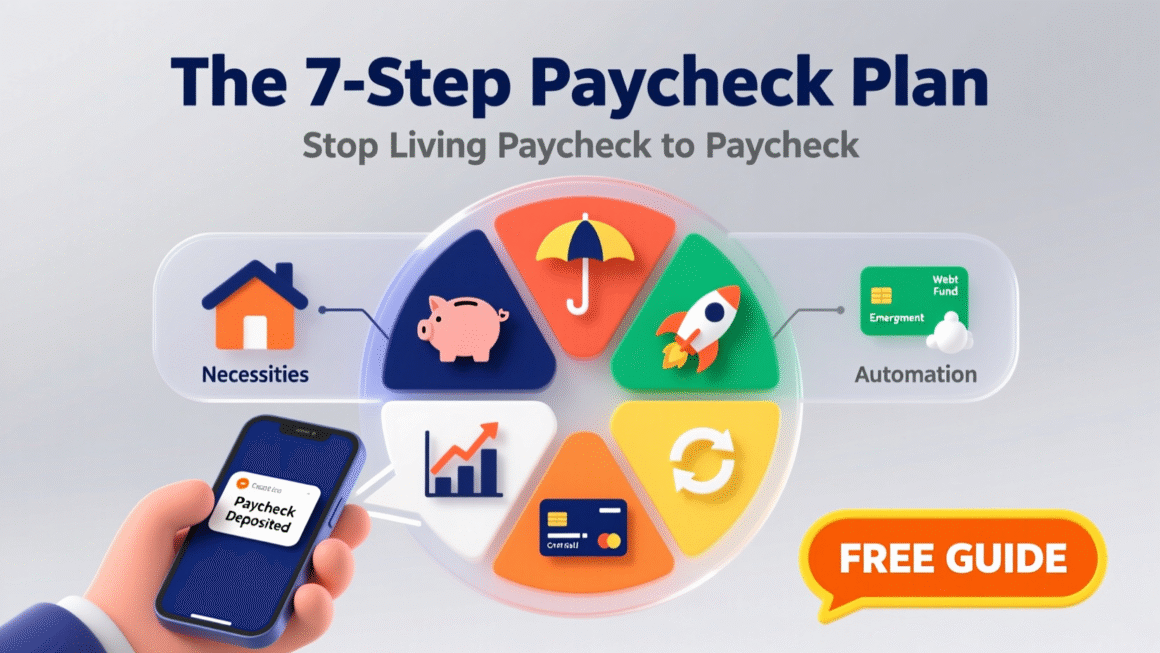
You must set your money up to automatically flow where it needs to go. This is the core of a Conscious Spending Plan: saving intentionally and automatically for the things you value, so when the big day arrives, you can enjoy it fully without a hint of financial stress. Can you get the shrimp at your wedding? If you started saving years ago, the answer is a resounding yes.
The Silent Joy-Killer: “I Can’t Shake the Guilt”
It’s one thing to be careful with your money. It’s another to be held captive by spending guilt. This regret doesn’t stem from a lack of funds, but from a broken money mindset.
I’ve spoken with people who have high incomes, even millions in net worth, who still feel a pang of anxiety buying a $5 coffee. There’s a nagging voice that whispers, “You shouldn’t be buying this.”
Where does this come from?
- Childhood Money Scripts: The phrases we heard growing up: “Money doesn’t grow on trees,” “We can’t afford that,” even when we could.
- Scarcity Mindset: The deep-seated fear that no matter how much you have, it could all disappear.
- Confusing Frugality with Virtue: This is rampant in the personal finance world—the belief that denying yourself makes you a “good” person, while spending makes you “bad.”
Imagine if someone had this relationship with food. It would be clearly dysfunctional. The same is true for money.
This is one of the saddest regrets I encounter. Money isn’t just for saving and investing in a vault. I believe the ultimate purpose of money is to use it to live a rich life. If you’ve been responsible, if you’ve saved and invested, but you still feel guilty about a dinner out or a family trip, you are playing small. What a tragedy to live a life smaller than the one you can actually afford.
The Generational Curse: “I Never Taught My Kids About Money”
This regret often surfaces later in life. Parents confess, “We never talked about money,” or “I feel like we’re repeating the same generational patterns I grew up with.”
Why do parents avoid it? Often, it’s because they are not comfortable with their own relationship with money. The only discussions about money become tense commands: “Put that back,” “We can’t afford that,” “Money doesn’t grow on trees.”
When I push parents on this, they often say, “I just want kids to be kids. I don’t want them to worry.”
But let’s reframe that. You would never say, “I don’t want my kids to worry about how to ride a bike.” No, you would teach them the skill. You would show them how, even when it’s hard. Why don’t we do that with money?
The secret to teaching kids about money starts not with a lesson plan, but with a mirror. It starts with you. When you build a healthy, positive relationship with money—when your kids see you discuss trade-offs, save for goals, and use money to enrich your family’s life—you are modeling the behavior they will internalize. The problem isn’t your child’s ignorance; it’s your own discomfort.
The Heartbreaking Dynamic: “We’re Not on the Same Page”
This final regret is perhaps the most preventable, and that’s what makes it so heartbreaking. I see this dynamic constantly on my podcast, especially in heterosexual relationships.
The man will often say, “I’m the money person. She stresses about money a lot, so I just tell her, ‘It’s going to be okay.’” He sees himself as the provider and the protector from worry.
At the same time, the woman will describe herself as the one who “handles the day-to-day finances”—paying the bills, managing the household expenses. Inevitably, as she engages with the daily reality of their money, she starts to worry. And when she tries to engage her partner, she’s met with a dismissive, “Don’t worry, it’s fine.”
This is what I call “ignorant reassurance.” How can the person who isn’t engaged with the details be so sure it’s fine?
Over time, this creates deep resentment. One partner feels isolated, unheard, and burdened with the mental load. The other feels irritated and unappreciated. It’s a fragile, unhappy dynamic.
It doesn’t have to be this way.
When I got engaged, I could have easily taken the role of the sole “money guy.” I decided against it. From day one, I made it a priority for us to be equal partners in our financial life. Why? Because a partnership where one person is ignorant and powerless is not a true partnership. I didn’t want a relationship where one of us had to ask for permission to spend. I wanted us both to understand our money, to be able to talk about risk and trade-offs, and to plan together for our rich life.
That is a gift you can give your relationship. Make it a priority to get on the same page.
The Common Thread and The Ultimate Antidote
Do you see the pattern running through all these regrets? Fear. Fear of missing out, fear of loss, fear of being judged, fear of the future. Our entire media ecosystem is built on selling fear because it grabs our attention.
But a life built on fear-based decisions will never be a rich life.
The antidote is not a complex secret. It is the simple, deliberate act of building a plan and taking consistent action. It’s about moving from a reactive state of guilt and fear to a proactive state of confidence and control.
It means knowing your numbers so well that you can make decisions from a place of strength. It means mastering your money psychology so you can spend generously on the things you love while cutting costs mercilessly on the things you don’t.
The biggest surprise, the deepest regret I hear, isn’t about a bad investment or a failed speculation. It’s the realization that people let fear dictate their financial story. They lived smaller, fought more, and worried constantly, all while having the potential to write a different ending.
Your money is a tool to design the life you want. Stop regretting the past and start building the future. The power to do so has been in your hands all along.