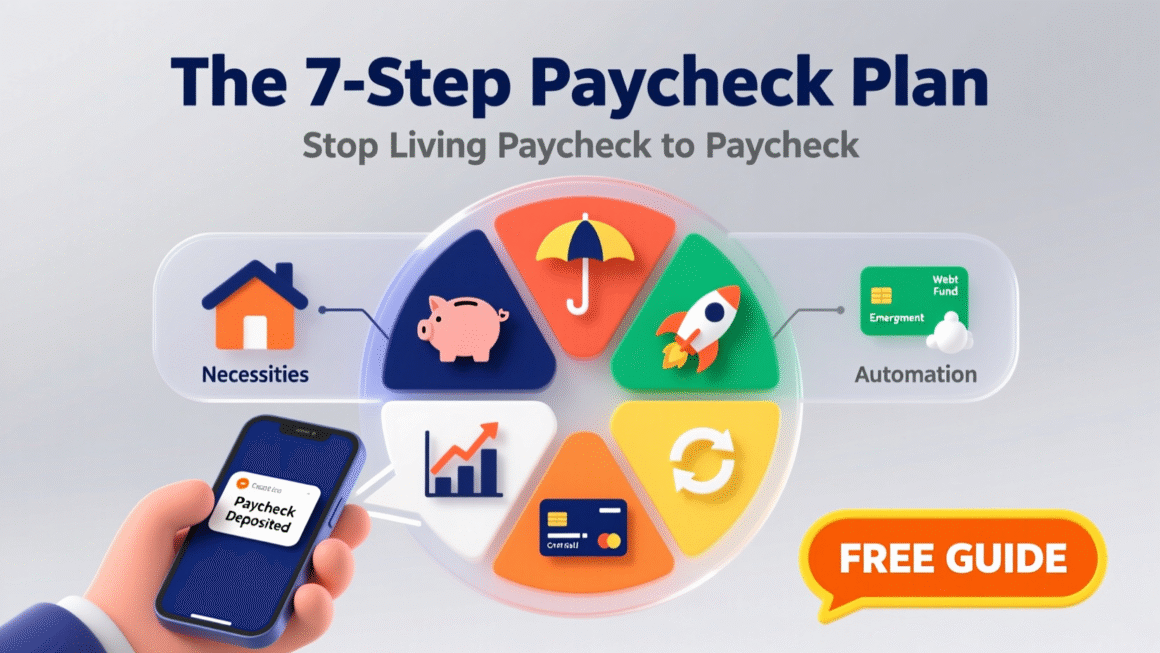









The Path to Financial Freedom: A Comprehensive Guide
The path to financial freedom may seem like a distant dream, but it’s a goal that is achievable with a clear plan, disciplined habits, and strategic action. Financial freedom isn’t about making a fortune overnight; it’s about taking control of your finances in a structured, intentional way. It’s about waking up one day and realizing that money no longer controls your decisions—that you have choices, options, and the breathing room to live life according to your values rather than your paycheck. Here’s a step-by-step roadmap to achieving lasting financial independence.
Step One: Assess Your Current Financial Situation
The first step toward financial freedom is understanding where you stand. This means taking a deep dive into your income, expenses, assets, and liabilities. How much are you earning each month? How much are you spending? What debts or obligations are holding you back? By creating a comprehensive financial snapshot, you can identify areas of waste, hidden opportunities for savings, and the precise resources available for investing. Many people skip this step, but clarity is the foundation upon which all financial freedom is built.
Think of this assessment as taking your financial pulse. You wouldn’t go on a road trip without knowing your starting point, and the same principle applies to your money journey. Gather your bank statements, credit card bills, loan documents, and pay stubs. Lay everything out on the table—literally or digitally—and start tracking. How much did you spend on dining out last month? What about subscriptions you’ve forgotten about? Are there insurance policies you’re paying for that no longer serve you?
This process can be uncomfortable. Many of us avoid looking too closely at our finances because we’re afraid of what we’ll find. Maybe there’s more debt than we remembered, or perhaps our savings account is embarrassingly low. But here’s the truth: you cannot improve what you don’t measure. Ignorance might feel like bliss in the short term, but it’s a recipe for long-term financial stress. Facing your numbers head-on, no matter how daunting, is an act of courage and the first real step toward change.
Create a simple spreadsheet or use a budgeting app to organize your findings. List all sources of income—your salary, any freelance work, investment returns, government benefits, or other cash flows. Then, categorize your expenses: housing, transportation, food, utilities, entertainment, debt payments, insurance, and miscellaneous spending. Don’t forget to include annual or semi-annual expenses like car registration, holiday gifts, or property taxes—these can throw off your monthly budget if you’re not prepared.
Once you have this complete picture, calculate your net worth. This is the difference between what you own (assets like savings, investments, property) and what you owe (liabilities like credit card debt, student loans, mortgages). Your net worth might be positive or negative, but either way, it’s just your starting point. What matters is that you know where you’re beginning so you can track your progress over time.
This assessment phase also helps you identify behavioral patterns. Are you an emotional spender who shops when stressed? Do you tend to underestimate how much you spend on small daily purchases like coffee or snacks? Do unexpected expenses regularly catch you off guard? Understanding these patterns allows you to address the root causes of financial leakage, not just the symptoms.
Step Two: Set Clear, Achievable Goals
Without goals, money management becomes directionless. Set both short-term and long-term financial objectives. Short-term goals might include paying off high-interest debt, building an emergency fund, or saving for a big purchase. Long-term goals could involve buying a home, funding education, or achieving retirement independence. These goals should be specific, measurable, achievable, relevant, and time-bound—SMART goals. Having a roadmap not only guides your financial decisions but also motivates consistent action over time.
Goals give your money purpose. Instead of watching dollars drift in and out of your accounts with no clear destination, you’re directing them toward meaningful outcomes. This transforms the sometimes tedious work of budgeting and saving into something energizing. You’re not just cutting back on expenses—you’re funding your future home, your child’s education, or your freedom to work less and travel more.
Start by brainstorming everything you want to accomplish financially. Don’t censor yourself at this stage. Write down the practical goals—like eliminating credit card debt—alongside the dreams that feel audacious, like retiring early or taking a year off to volunteer abroad. Once you have this list, organize it by timeframe. What do you want to achieve in the next year? The next five years? By retirement age?
Now, make these goals concrete. Instead of saying “I want to save more,” specify “I want to save $10,000 for an emergency fund within 18 months.” Instead of “I want to pay off debt,” state “I will pay off my $5,000 credit card balance within two years by making monthly payments of $220.” The more specific you are, the easier it becomes to track progress and adjust course when necessary.
Break larger goals into smaller milestones. If your long-term goal is to save $100,000 for a home down payment in seven years, your annual target is approximately $14,300, or about $1,200 per month. Suddenly, that massive number feels manageable when you break it down into bite-sized pieces. Celebrate each milestone—when you hit $10,000, then $25,000, and so on. These celebrations reinforce positive behavior and keep you motivated during the long journey.
It’s also important to prioritize. You likely can’t pursue every goal simultaneously at full speed. Which goals are most urgent? Which align most closely with your values? For many people, building an emergency fund and eliminating high-interest debt take precedence because they provide financial stability and reduce stress. Once those foundations are in place, you can shift focus to longer-term wealth-building goals like investing for retirement or saving for major purchases.
Write your goals down and review them regularly. Place them somewhere visible—on your refrigerator, your bathroom mirror, or as the wallpaper on your phone. This constant reminder keeps your objectives front and center, making it easier to resist impulse purchases or stick to your budget when temptation strikes. When you’re considering buying something expensive, you can ask yourself: “Does this purchase move me closer to my goals, or further away?”
Remember that goals can evolve. Life circumstances change—you might get married, have children, change careers, or face unexpected health issues. Your financial goals should be flexible enough to adapt to these shifts while remaining focused enough to drive meaningful action. Review and update your goals at least annually, or whenever you experience a major life change.
Step Three: Create a Budget and Eliminate Debt
Budgeting is the bridge between your current financial situation and your goals. By allocating funds to essential expenses, savings, and investments, you create a controlled system where money works for you rather than slipping away unnoticed. A key part of this step is debt management. High-interest debt, such as credit card balances or payday loans, is one of the biggest obstacles to financial freedom. Focus on paying down these liabilities aggressively while maintaining a lean, sustainable lifestyle. Over time, reducing debt frees up resources to invest and grow wealth.
A budget isn’t a restriction—it’s permission. It’s permission to spend on things that matter while consciously choosing not to waste resources on things that don’t. Think of a budget as a spending plan that reflects your priorities and values. When designed well, it shouldn’t feel suffocating; instead, it should feel empowering because you’re in control.
There are many budgeting methods to choose from. The 50/30/20 rule suggests allocating 50% of your income to needs, 30% to wants, and 20% to savings and debt repayment. The zero-based budget assigns every dollar a job, ensuring your income minus expenses equals zero at the end of each month. The envelope system uses cash allocated to different spending categories to prevent overspending. Experiment to find what works for your personality and lifestyle.
Regardless of the method you choose, start by categorizing your expenses as fixed or variable. Fixed expenses—like rent, car payments, and insurance—stay relatively consistent month to month. Variable expenses—like groceries, entertainment, and clothing—fluctuate. Fixed expenses are harder to adjust quickly, but variable expenses offer immediate opportunities for cost cutting if needed.
Now comes the hard part: identifying where you can reduce spending. Look for the low-hanging fruit first. Are you paying for streaming services you rarely use? Can you cook at home more often instead of ordering takeout? Could you bring coffee from home rather than stopping at a café daily? These small changes might seem insignificant individually, but collectively they can free up hundreds of dollars each month.
But budgeting isn’t just about cutting—it’s about optimizing. Sometimes spending more in one area actually saves money overall. Buying higher-quality items that last longer, investing in preventive health care, or paying for a gym membership that you actually use can be financially wise choices. The goal is intentional spending aligned with your goals, not deprivation for its own sake.
Now, let’s tackle debt. Debt comes in many forms, and not all debt is equally harmful. Mortgages and student loans typically carry relatively low interest rates and can be considered “good debt” because they fund appreciating assets or investments in your earning potential. Credit card debt and payday loans, on the other hand, often carry interest rates of 15% to 30% or higher—these are wealth destroyers that must be eliminated as quickly as possible.
Two popular strategies for debt repayment are the avalanche method and the snowball method. The avalanche method prioritizes debts with the highest interest rates first, saving you the most money in interest over time. The snowball method targets the smallest balances first, providing quick psychological wins that build momentum. Both work—choose based on whether you’re motivated more by mathematical optimization or emotional victories.
Whichever method you choose, commit to making more than minimum payments whenever possible. Minimum payments are designed to keep you in debt for years, sometimes decades. Even an extra $50 or $100 per month toward your highest-priority debt can shave years off your repayment timeline and save thousands in interest.
Consider strategies to accelerate debt repayment. Can you redirect windfalls—tax refunds, work bonuses, or gifts—toward debt? Can you temporarily take on a side gig to generate extra income specifically for debt elimination? Can you negotiate with creditors for lower interest rates or better terms? These tactics require effort, but they can dramatically speed your journey to becoming debt-free.
As you pay down debt, don’t forget to build a small emergency fund simultaneously, even if it’s just $500 or $1,000. This buffer prevents you from going further into debt when unexpected expenses arise—and they will arise. Once your high-interest debt is eliminated, you can focus on building a more substantial emergency fund of three to six months of living expenses.
Living below your means during this phase is crucial. It might mean saying no to vacations, delaying major purchases, or choosing a modest lifestyle while others around you spend freely. This requires discipline and sometimes social courage. But remember: this is temporary discomfort for long-term freedom. Every dollar you put toward debt today is a dollar that will eventually be available for building wealth.
Step Four: Build Multiple Streams of Income
Relying on a single paycheck is risky and slows down your journey to financial independence. The fourth step is to diversify your income streams. This could include side hustles, freelance work, dividend-paying investments, rental properties, or small business ventures. Passive income, in particular, is a game-changer, as it generates money even while you sleep. Each additional income stream builds resilience, reduces financial stress, and accelerates your ability to achieve true freedom.
The traditional model of working one job for forty years and then retiring is becoming increasingly outdated and risky. Job security is less certain than it once was. Companies downsize, industries evolve, and economic disruptions can eliminate entire categories of employment. Having multiple income streams isn’t just about making more money—it’s about creating financial resilience and opportunity.
Start by identifying skills, knowledge, or assets you can monetize beyond your primary job. Are you skilled at graphic design, writing, coding, or consulting? Platforms like Upwork, Fiverr, and Freelancer connect skilled professionals with clients worldwide. Do you have expertise in a particular subject? You could create online courses, offer tutoring, or write ebooks. Do you own extra space in your home? You could rent out a room on Airbnb or store someone’s belongings for monthly fees.
Side hustles come in countless forms. Some require specialized skills, while others just need time and effort. You could drive for rideshare services, deliver food, walk dogs, do yard work, clean houses, or flip items found at thrift stores and garage sales. The key is finding something that fits your schedule, interests, and income goals without burning you out.
While active income from side hustles provides immediate cash flow, passive income is where the real magic happens. Passive income streams require upfront effort or investment but then generate revenue with minimal ongoing work. Dividend-paying stocks, for instance, distribute regular payments to shareholders. Real estate investments can provide rental income. Creating digital products—like templates, stock photos, or software—allows you to sell the same item repeatedly without additional work.
Building passive income takes time and often requires initial capital or significant effort. Writing a book that generates royalties, developing a popular blog with advertising revenue, or creating a successful YouTube channel all demand substantial work before they produce meaningful income. But the payoff is worth it: eventually, you earn money whether you’re working, sleeping, or on vacation.
Rental properties deserve special mention as a powerful income stream. Real estate can provide monthly rental income, potential appreciation, and tax benefits. However, being a landlord isn’t truly passive—it requires property management, dealing with tenants, and handling maintenance issues. Some investors hire property managers to handle these tasks, reducing involvement but also cutting into profit margins. Real estate investing works well for some people but isn’t right for everyone, so educate yourself thoroughly before diving in.
Another often-overlooked income stream is optimizing your primary career. Can you negotiate a raise? Pursue a promotion? Switch to a higher-paying position at another company? Develop skills that make you more valuable in the marketplace? Sometimes the best way to increase income is to focus on maximizing your earning potential in your main field before adding side hustles.
Don’t spread yourself too thin. It’s better to develop one or two solid additional income streams than to dabble in ten different things without real focus. Each income stream requires time to establish, optimize, and maintain. Start with one, get it running smoothly, and then add another if you have the capacity.
As your additional income grows, resist lifestyle inflation. The purpose of extra income is to accelerate your progress toward financial freedom, not to fund a more expensive lifestyle. Direct this money toward debt elimination, building your emergency fund, or investing for long-term growth. The discipline to save and invest additional income, rather than immediately spending it, is what separates those who achieve financial freedom from those who simply earn more but remain financially stressed.
Building multiple income streams also provides psychological benefits. Knowing you have options reduces the anxiety that comes with depending entirely on a single employer. If you lose your primary job, you still have other income flowing while you search for new employment. This security allows you to take calculated career risks, negotiate from a position of strength, and pursue opportunities that align with your values rather than just accepting whatever pays the bills.
Step Five: Invest Wisely for Long-Term Growth
The final step is where your money begins to multiply. Wise investing turns your disciplined savings into wealth. Whether it’s stocks, real estate, mutual funds, or retirement accounts, the goal is to harness the power of compound growth. Diversification is crucial—spreading investments across different assets minimizes risk while maximizing potential returns. Equally important is maintaining a long-term mindset: markets fluctuate, but history shows that disciplined, patient investing grows wealth steadily over decades.
Investing might seem intimidating, especially if you’re new to the world of stocks, bonds, and mutual funds. But here’s the reality: not investing is a decision with consequences. Money sitting in a regular savings account loses purchasing power over time due to inflation. To build real wealth, you must put your money to work in assets that grow faster than inflation erodes value.
Start by understanding the basic investment vehicles available. Stocks represent ownership in companies and offer high growth potential but come with volatility. Bonds are essentially loans to governments or corporations that pay regular interest and are generally more stable but offer lower returns. Mutual funds and exchange-traded funds (ETFs) pool money from many investors to buy diversified portfolios of stocks and bonds, offering instant diversification even with small investment amounts. Real estate, as mentioned earlier, provides both income and potential appreciation. Each asset class has different risk-return profiles, and a well-designed portfolio includes a mix.
Retirement accounts like 401(k)s and IRAs offer powerful tax advantages. Traditional accounts allow you to contribute pre-tax dollars, reducing your current taxable income, while Roth accounts use after-tax dollars but allow tax-free withdrawals in retirement. Many employers match 401(k) contributions up to a certain percentage—this is free money you should never leave on the table. Max out any employer match first, as it provides an immediate 100% return on your investment.
Diversification is your shield against risk. Don’t put all your eggs in one basket—or even a few baskets. Spread investments across different asset classes, industries, and geographic regions. If one sector crashes, others may remain stable or even grow, protecting your overall portfolio. Target-date funds automatically adjust your asset allocation to become more conservative as you approach retirement, offering a simple diversification solution for hands-off investors.
Compound growth is the eighth wonder of the world—or at least that’s what many financial experts claim. When you invest money and earn returns, those returns generate their own returns in subsequent periods. Over time, this compounding effect creates exponential growth. A $10,000 investment earning 8% annually grows to about $21,600 after ten years—but after thirty years, it balloons to over $100,600. Time is your most valuable asset in investing, which is why starting early matters so much.
Dollar-cost averaging is a strategy that reduces the risk of investing a large sum at the wrong time. Instead of investing all your money at once, you invest fixed amounts at regular intervals—like $500 every month. When markets are down, your fixed investment buys more shares; when markets are up, it buys fewer. Over time, this averages out your purchase price and removes the emotional stress of trying to “time the market.”
Speaking of timing the market: don’t. Even professional investors with massive research teams and sophisticated algorithms struggle to consistently predict short-term market movements. For individual investors, attempting to time the market usually leads to buying high (when excitement peaks) and selling low (when fear dominates). Instead, adopt a buy-and-hold strategy. Stay invested through market ups and downs, trusting that long-term trends favor patient investors.
Educate yourself continuously. Read books about investing, follow reputable financial news sources, and consider taking courses on personal finance. Understanding basic concepts like asset allocation, expense ratios, tax efficiency, and rebalancing empowers you to make informed decisions rather than relying entirely on advisors. However, don’t let analysis paralysis prevent you from starting. You don’t need to become an expert before making your first investment—basic knowledge plus consistent action beats perfect knowledge with no action.
Consider working with a financial advisor, especially as your wealth grows and your situation becomes more complex. Fee-only advisors charge flat fees or hourly rates rather than earning commissions on products they sell, reducing conflicts of interest. A good advisor helps you develop a comprehensive financial plan, optimize tax strategies, and stay disciplined during market volatility. But choose carefully—bad advice can be expensive.
Keep costs low. Investment fees might seem small—a 1% management fee doesn’t sound like much—but they compound negatively over time, significantly reducing your wealth. A portfolio charging 1% in fees versus one charging 0.1% could cost you hundreds of thousands of dollars over a lifetime. Favor low-cost index funds and ETFs that track market benchmarks rather than expensive actively managed funds that rarely outperform after fees.
Regularly rebalance your portfolio. Over time, some investments grow faster than others, shifting your asset allocation away from your target. If you wanted 70% stocks and 30% bonds but stocks have surged, you might now have 80% stocks and 20% bonds—more risk than intended. Rebalancing involves selling some of the overperforming assets and buying more of the underperforming ones, maintaining your desired risk level.
Don’t panic during downturns. Market crashes are scary, but they’re also inevitable and temporary. Every major market decline in history has eventually been followed by recovery and new highs. If you sell during a crash, you lock in losses and miss the eventual recovery. In fact, downturns present opportunities to buy quality investments at discounted prices. As Warren Buffett famously advised, “Be fearful when others are greedy, and greedy when others are fearful.”
Finally, remember that investing is a marathon, not a sprint. Wealth isn’t built overnight through get-rich-quick schemes or hot stock tips. It’s built gradually, through consistent contributions, smart diversification, low costs, and patient discipline. There will be years when your portfolio soars and years when it declines. What matters is staying the course, continuing to invest regularly, and trusting the process.
The Journey to Financial Freedom
Financial freedom is a journey, not a sprint. By assessing your finances, setting clear goals, budgeting wisely, diversifying income, and investing strategically, you create a framework for independence that stands the test of time. Every small step compounds, turning daily financial discipline into long-term security. While challenges are inevitable, the payoff is unparalleled: the ability to live life on your terms, free from financial stress, with resources to pursue passions, opportunities, and dreams.
The road to financial freedom isn’t always smooth. You’ll face setbacks—unexpected expenses, market downturns, job losses, or personal emergencies. You’ll be tempted to give up when progress feels slow or when others around you seem to be living more extravagantly. You’ll make mistakes, choosing some investments that don’t pan out or falling back into old spending habits during moments of weakness.
But here’s what separates those who achieve financial freedom from those who don’t: persistence. The people who succeed aren’t necessarily smarter, luckier, or more talented. They’re simply more consistent. They keep showing up, month after month, year after year, making small decisions that align with their goals even when it’s inconvenient or unglamorous.
Financial freedom isn’t primarily about money—it’s about choices. It’s about having the choice to leave a job that drains you. The choice to help family members in need. The choice to pursue passion projects that don’t generate income. The choice to retire early, work part-time, or take a career sabbatical. Money is simply the tool that creates options, and options create freedom.
As you progress on this journey, you’ll notice subtle shifts in your relationship with money. Anxiety and stress gradually give way to confidence and peace. The constant worry about making ends meet fades as your emergency fund grows. The weight of debt lifts as you watch balances decrease and eventually disappear. The excitement of watching investments grow replaces the frustration of living paycheck to paycheck.
You’ll also develop valuable skills and mindsets that extend beyond finances. Discipline, delayed gratification, strategic thinking, and resilience—these qualities, honed through managing money well, enrich every area of life. You become someone who sets goals and achieves them, who makes plans and executes them, who faces challenges and overcomes them.
Don’t compare your progress to others. Someone else might appear to be further along, but you don’t know their full story—their starting advantages, their hidden struggles, or whether their apparent wealth is built on a foundation of debt. Focus on your own journey, celebrating your victories no matter how small they seem. Paid off a credit card? That’s huge. Built a $1,000 emergency fund? That’s real progress. Increased your net worth by 10% this year? That’s worth celebrating.
Share what you’re learning. Talk openly with friends and family about financial topics. Many people struggle in silence, believing they’re uniquely bad with money when in reality, financial literacy isn’t taught in most schools and many adults never learn effective money management. By sharing your journey—the mistakes and the victories—you normalize these conversations and might inspire others to take control of their finances too.
Be patient with yourself during this process. Changing financial behaviors means changing habits, and habits take time to rewire. You might slip up and make impulsive purchases. You might skip a month of investing because other expenses came up. That’s okay. What matters is the overall trajectory, not perfection at every moment. Every day is a new opportunity to make choices that align with your goals.
As you move through these five steps, revisit them regularly. Financial freedom isn’t a destination you reach and then forget about—it’s an ongoing practice. Your assessment in Step One shouldn’t be a one-time event but a quarterly or annual ritual. Your goals in Step Two will evolve as your life changes. Your budget in Step Three needs adjusting as income and expenses shift. Your income streams in Step Four require nurturing and occasional pruning. Your investments in Step Five need periodic attention and rebalancing.
The beautiful thing about this framework is its scalability. Whether you’re starting with $100 or $100,000, whether you’re 25 or 55, whether you’re deep in debt or already have a positive net worth, these principles apply. You simply start where you are, work with what you have, and build from there. Progress might be slower at some stages than others, but every step forward matters.
Financial freedom also creates a positive ripple effect beyond your own life. When you’re financially secure, you’re better positioned to support causes you care about, help family members, and contribute to your community. You model healthy financial behaviors for children or younger relatives, breaking cycles of financial stress that might have existed in your family for generations. You have the bandwidth to volunteer, to take career risks that benefit society, or to start businesses that create jobs.
Think about what financial freedom means to you personally. For some, it’s the ability to retire at 45 and travel the world. For others, it’s working in a fulfilling but lower-paying field without financial stress. For some, it’s having the resources to care for aging parents or support children through college debt-free. For others, it’s simply sleeping soundly at night knowing that an unexpected car repair or medical bill won’t derail life. Define your own version of financial freedom and let that vision pull you forward when the journey gets tough.
Remember that financial freedom isn’t about hoarding money for its own sake. Money is a tool, not a goal. The purpose of building wealth is to create freedom, security, and opportunities for meaningful living. If achieving financial freedom means sacrificing everything that makes life worth living—relationships, health, experiences, values—you’ve missed the point. The goal is finding balance: disciplined enough to make progress, but flexible enough to enjoy the journey.
By following these five steps, financial freedom moves from a vague aspiration to a tangible, actionable plan—a plan that transforms how you manage money, build wealth, and ultimately, control your future. You’re not waiting for a windfall, a perfect job, or ideal circumstances. You’re taking control now, with what you have, where you are. And that decision—the decision to start, to persist, to build something better—is where financial freedom truly begins.