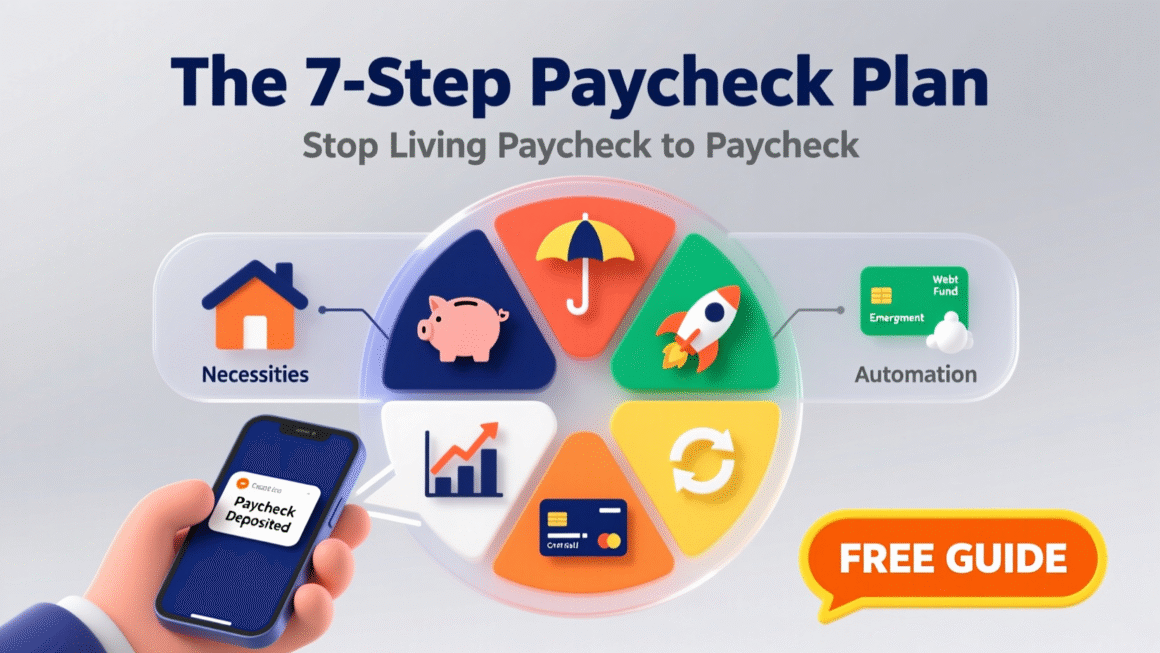









Saving your first thousand dollars. Just reading that sentence might bring up a mix of feelings. For a lot of us, it feels like a monumental task, a mountain that’s just too steep to climb, especially when you’re in that cycle where your income seems to barely, and I mean just barely, cover your monthly bills. It can feel like you’re running on a financial treadmill, working hard but not actually getting anywhere. You watch the money come in, and then, almost like clockwork, you watch it flow right back out to rent, utilities, groceries, and that ever-growing list of life’s little necessities. The idea of having a whole thousand dollars just sitting there, untouched, can feel like a fantasy.
But I’m here to tell you something important, and I want you to really hear it: reaching that first financial milestone is not only possible—it’s genuinely transformative. It’s a game-changer. That first $1,000 is almost always the hardest to save. It requires a shift in mindset, a new set of habits, and a good dose of perseverance. But once you have it, it does something incredible. It lays the absolute bedrock foundation for long-term financial stability and future wealth-building. It’s the seed from which a mighty oak of financial security can grow. It transforms money from this abstract, stressful thing that happens to you, into a tangible tool that you control. Here’s a practical, step-by-step roadmap to help you reach that goal efficiently, without losing your mind in the process.
1. Set a Clear and Unmistakable Goal
The very first step is all about moving from a fuzzy wish to a crystal-clear target. It’s the difference between saying “I’d like to get in shape” and signing up for a 5k race. So, instead of vaguely aiming to “save some money” or “spend less,” you need to commit to a specific, non-negotiable figure: $1,000. Write it down. Say it out loud. “I am saving one thousand dollars.”
Then, and this is the crucial part, break this big, somewhat intimidating number down into bite-sized, weekly or monthly goals. This is what makes it tangible and stops it from feeling impossible. The math is your friend here. Let’s break it down: saving fifty dollars a week will get you to $1,000 in just twenty weeks. That’s less than five months. If fifty a week feels like a stretch right now, what about twenty-five dollars a week? That gets you there in forty weeks. Suddenly, that big number doesn’t seem so big anymore, does it? Having this concrete, mini-goal keeps your motivation high because you get to have little victories every single week. You can track your progress in a way that feels real and rewarding.
2. Track Every Single Expense, No Matter How Small
This is where most budgets fail before they even start. We all have a sort of internal story we tell ourselves about where our money goes. We think we’re pretty careful, right? But the truth is, most of us vastly underestimate how much we spend on the daily, almost invisible habits—the mid-afternoon coffee and muffin, the quick snack from the vending machine, the online subscriptions we signed up for on a whim and then completely forgot about, the extra takeout meal because we were just too tired to cook.
For at least one month, I want you to become a financial detective. Track every. Single. Expense. And I mean every one. That two-dollar chocolate bar? Write it down. The five-dollar mobile app purchase? Log it. You can use fantastic apps like Mint or You Need A Budget (YNAB) that link to your accounts and automate a lot of this. If you’re more old-school like me, a simple notebook or a spreadsheet on your phone works just as well. The method doesn’t matter; the consistency does. The goal here isn’t to judge yourself, but to gather data. You can’t fix a leak if you don’t know where it is. After a month, you will have a powerful, and often surprising, picture of exactly where your money is going. This knowledge is your superpower. It’s what makes cutting unnecessary spending not a painful guess, but a strategic decision.
3. Create a Realistic, No-Guilt Budget
The word “budget” can sound restrictive and joyless, like a financial straitjacket. Let’s reframe that. Think of your budget not as a constraint, but as a blueprint for your financial success. It’s the plan that tells your money where to go, so you don’t have to wonder where it went.
Start simple. Write down your total monthly take-home pay at the top of the page. Then, subtract your fixed, non-negotiable expenses: rent or mortgage, utilities, car payment, insurance, and a realistic amount for groceries. What you have left is your discretionary spending. Now, here is the most important line item you will add: Savings. From this moment on, your savings contribution is not an afterthought. It is a non-negotiable “expense,” just like your rent. Pay yourself first. Even if you can only allocate ten or twenty dollars from each paycheck to start, that’s okay. The act of making it a fixed line in your budget is what matters. Small amounts, set aside with relentless consistency, have a magical way of compounding over time, both in your bank account and in your confidence.
4. Automate Your Savings and Remove Temptation
This is quite possibly the most powerful step on this entire list. We are all human, and willpower is a finite resource. After a long, tough day, the temptation to skip your savings transfer and just order a pizza can be overwhelming. So, why rely on willpower when you can use systems?
Set up an automatic transfer from your checking account to a dedicated savings account for the very same day your paycheck hits your account. You can usually do this through your online banking in about five minutes. Name the account something inspiring like “My $1,000 Fund” or “Financial Freedom.” Once it’s automated, the saving happens in the background, effortlessly and silently. You don’t have to think about it, you don’t have to fight the temptation to spend it, because it’s already gone to its proper home. This ensures that saving is consistent and, most importantly, foolproof. Over time, this discipline becomes second nature. You’ll adjust your spending to what’s left in your checking account, and you’ll watch, almost in disbelief, as your $1,000 goal approaches faster than you ever expected.
5. Cut Unnecessary Expenses with a Kind but Firm Eye
Now, armed with the data from your expense tracking, it’s time for a gentle but honest review. Look over your spending and identify the areas you can trim. Be kind to yourself—this isn’t about deprivation, it’s about reallocation. You’re moving money from things that don’t add much value to your life into something that adds enormous value: your peace of mind.
That daily four-dollar coffee from the café down the street? Brewing a fantastic cup at home could easily save you over a hundred dollars a month. That’s not just chump change. Those three streaming service subscriptions you have, but you only really use one? Cancel the other two. You can always re-subscribe later. Dining out, frequent rideshare trips, and impulse online purchases are all prime targets. Look at each expense and ask yourself: “Did this truly bring me lasting joy or value, or was it just a momentary convenience?” For every “no,” you’ve found fuel for your savings fire. The moment you cancel that unused subscription or decide to brown-bag your lunch, immediately redirect that exact amount of money into your savings account. Make the connection direct and immediate.
6. Boost Your Income and Accelerate Your Journey
Let’s be real: cutting expenses can only take you so far. There’s a natural limit to how much you can reduce your spending. But the potential to increase your income is, for most of us, far more expansive. Working on both sides of the equation—spending less and earning more—is like putting a jet engine on your savings plan.
Think creatively about how you can bring in extra cash. Do you have a skill you can monetize? Writing, graphic design, social media management, or tutoring? Freelance platforms are a great place to start. Could you pick up a part-time gig for a few months, even just on the weekends? Something like dog-walking, delivering food, or working a few shifts at a local store. Another incredibly effective method is to do a purge of your home. We all have them—closets, basements, and garages full of items we no longer use or love. Selling these items online on platforms like eBay, Facebook Marketplace, or Poshmark is a triple win: you declutter your space, you make money, and you’re reminded of the cost of past impulse buys. Even an extra fifty or a hundred dollars a month can slash the time it takes to reach your goal, giving you a huge psychological boost.
7. Embrace the Power and Joy of Small Wins
The journey to a thousand dollars can’t just be about the final destination. If it is, the road will feel long and dreary. You have to celebrate the scenery along the way. This is about psychology as much as it is about finance.
Don’t underestimate the incredible boost you get from seeing your progress in smaller chunks. Set mini-milestones and genuinely celebrate them. When you hit $250, do a little dance! That’s a quarter of the way there! Treat yourself to a nice, home-cooked meal to mark the occasion. At $500, you’re halfway—that’s a massive achievement. Take a moment to feel proud. Maybe buy yourself a small, non-financial treat, like a long walk in your favorite park or a movie night at home. These small wins build powerful momentum. They reinforce the habit of saving by making it feel rewarding now, not just in some distant future. They prove to yourself that you are capable and that your plan is working.
8. Consciously Avoid Lifestyle Inflation
This one is a sneaky trap, especially if you’ve successfully boosted your income. Lifestyle inflation is what happens when you get a raise, a tax refund, or start earning that side-hustle cash, and almost without thinking, your spending creeps up to meet it. You think, “I’m earning more, I can afford to spend a little more,” and suddenly you’re back at square one, just with fancier things.
As your income increases, you must be fiercely intentional about resisting the urge to immediately upgrade your lifestyle. This is the secret sauce of rapid wealth-building. Maintaining a modest, comfortable lifestyle while saving aggressively is what allows your savings to grow at an astonishing rate. Remember, the ultimate goal here is financial security and flexibility—the profound peace of mind that comes from knowing you have a buffer between you and life’s surprises. That feeling is infinitely more valuable than the temporary buzz of instant gratification from a new gadget or a more expensive apartment.
9. Keep Your Goal Constantly Visible
Out of sight is, unfortunately, out of mind. In the busyness of daily life, your savings goal can easily get buried under more immediate concerns. That’s why you need to create visual reminders that keep your focus sharp.
This can be as simple as a sticky note on your bathroom mirror that says “$1,000!” or a hand-drawn progress chart on your fridge that you get to color in with a bright marker every time you add to your savings. You could set a custom wallpaper on your phone with a counter that shows your current balance. These constant, gentle nudges are surprisingly motivating. They keep the goal at the forefront of your mind, making you more likely to make choices that align with it. When you’re tempted to make an unnecessary purchase, that visual of your nearly-full chart can be the thing that gives you the strength to say, “Not today. I’m so close.”
10. Stay Patient and Unwaveringly Consistent
Finally, and this might be the most important step of all: be patient with yourself. Saving $1,000 is a marathon, not a sprint. For most people, it doesn’t happen overnight. There will be weeks where an unexpected car repair sets you back. There will be moments of frustration. The key is to not let a minor setback derail your entire mission. Just get back on track with the very next paycheck.
Consistency is your most powerful tool. Treat savings not as a burdensome chore, but as a positive habit, like brushing your teeth or exercising. It’s just something you do. Over time, as you watch that number grow from $100, to $300, to $750, you will feel a profound sense of empowerment. You are no longer a passive participant in your financial life; you are the active, capable director.
Reaching your first $1,000 is so much more than just a number in a bank account—it’s a psychological breakthrough. It’s living proof that disciplined saving works. It shatters the myth that you’re “bad with money” and replaces it with the confident knowledge that you are in control. This single achievement sets the stage for every ambitious financial goal that follows, whether it’s building a full emergency fund, starting to invest for the first time, or saving for a down payment on a home or a dream vacation. With this clear plan, careful budgeting, and consistent, patient effort, your first $1,000 is not just achievable. It’s absolutely inevitable. You’ve got this.