






The Invisible Hands: How Central Banks Shape Our World
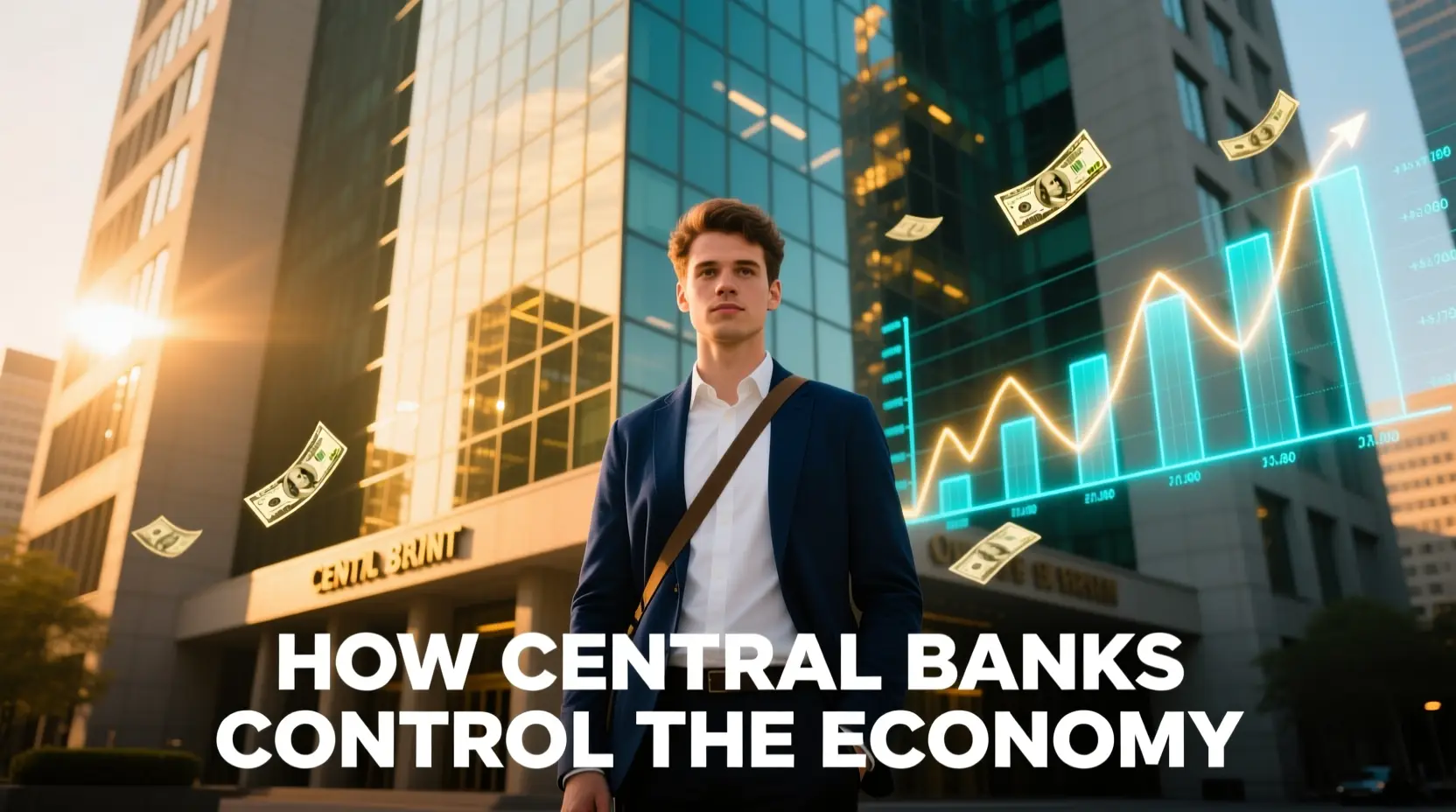
When you think about who really steers the economy, you might picture politicians giving grand speeches, charismatic CEOs announcing their latest products, or maybe even the frantic financial wizards on Wall Street. But the real puppeteers, the ones whose quiet decisions truly chart the course of our financial lives, often work in hushed, marble-lined halls, far from the public eye. These are the central banks. These institutions don’t make headlines every single day, and their leaders’ names might not be household ones, yet their decisions send ripples through the very fabric of the economy, influencing everything from how much you pay for your mortgage and your car loan, to the creeping cost of groceries, and even the meager interest you earn on your savings account. It’s a profound power, exercised so subtly that most of us never stop to consider it. But how exactly do these enigmatic institutions control the colossal, chaotic beast that is a modern economy? The answer is a fascinating blend of art, science, and immense responsibility.
The Master Toolkit: What is Monetary Policy?
At the core of a central bank’s influence lies its mastery of monetary policy. Think of it as a master craftsman’s toolkit, filled with specialized instruments designed for one overarching purpose: to stabilize the economy and steer it toward steady, sustainable growth without letting the destructive fire of inflation spiral out of control. This isn’t about quick fixes or political favoritism; it’s a long, patient game of applying pressure, measuring effects, and adjusting course. The goal is a “Goldilocks” economy—not too hot, not too cold, but just right. Achieving this delicate state is their holy grail, and the tools they use to get there are both powerful and nuanced.
The Lead Guitar: The Power of the Interest Rate
The most visible and talked-about tool in the kit is the interest rate. Specifically, central banks control a key interest rate—often called the policy rate—which is the rate at which commercial banks can borrow money from the central bank itself. This single rate acts as the anchor for the entire economy’s cost of borrowing. When a central bank lowers this rate, it creates a chain reaction. Borrowing becomes cheaper for commercial banks, which in turn pass on those lower rates to you and me. A family finds they can afford a bigger mortgage. A small business owner decides it’s the right time to take out a loan for a new storefront. A young couple finally finances that new car. This surge in spending and investment acts like a shot of adrenaline to the economic heart, stimulating growth and creating jobs.
Conversely, when the economy is running too hot—when everyone has a job, wages are rising fast, and prices for goods and services are starting to climb uncomfortably—the central bank will raise the key interest rate. This makes borrowing more expensive. That dream home suddenly comes with a much higher monthly payment, putting it out of reach. The business expansion is put on hold. People and companies start to tighten their belts. Spending slows, demand cools, and this gradual braking action helps to curb inflation. It’s a delicate, high-stakes balancing act: set rates too low for too long, and you risk prices surging into a dangerous spiral; set them too high, and you can choke off economic growth, triggering a recession and job losses. The central bankers are constantly reading the tea leaves of economic data, trying to judge the perfect moment and the precise degree of pressure to apply.
The Economic Bathtub: Managing the Money Supply
Beyond the blunt instrument of interest rates, central banks have another, more subtle set of tools for managing the amount of money circulating in the economy. This is often done through what are known as open market operations. In simple terms, the central bank buys or sells government securities (like bonds) from commercial banks. When the central bank buys these bonds, it pays the commercial banks with money that, quite literally, did not exist before. This injects fresh liquidity into the financial system, making more funds available for lending.
A helpful way to visualize this is to imagine the economy as a massive, complex bathtub. The water level represents the money supply. To stimulate a sluggish economy, the central bank turns on the taps, adding water. This extra liquidity encourages the flow of spending and investment, helping the economy to fill out. But if the tub is filling too quickly and risks overflowing—a metaphor for inflation—the central bank can pull the plug, selling bonds to the banks and effectively sucking that money back out of the system, slowing the flow down. It’s a continuous process of fine-tuning the water level.
Another lever they can pull is the reserve requirement. This is a rule that dictates the minimum amount of money that commercial banks must hold in reserve, rather than lending out to customers. If the central bank wants to encourage lending to get the economy moving, it can lower this requirement, freeing up billions of dollars for banks to issue as loans. If it wants to cool things down, it can raise the requirement, forcing banks to lock away more money and constricting the lifeblood of the modern economy: credit.
The Emergency Room: Quantitative Easing and the Lender of Last Resort
In times of extraordinary crisis, when the usual tools aren’t enough, central banks must reach for their emergency equipment. The global financial crisis of 2008 was one such moment. With interest rates already slashed to near zero and the economy still in freefall, central banks, led by the U.S. Federal Reserve, turned to a powerful and unconventional tool: quantitative easing, or QE.
QE is essentially open market operations on steroids. It involves the central bank creating vast sums of new money to purchase massive quantities of financial assets, not just government bonds but sometimes corporate debt or even mortgage-backed securities. This floods the banking system with an unprecedented wave of liquidity. The goal is to dramatically lower long-term interest rates and encourage borrowing and investment when conventional rate cuts have lost their punch. It’s a desperate measure for desperate times, a defibrillator applied to a patient in cardiac arrest. It’s not without significant risks—injecting such enormous amounts of money can plant the seeds for runaway inflation down the road—but in the face of a complete financial system meltdown, it was a risk central bankers felt they had to take.
This role as the emergency financier is formalized in the central bank’s critical function as the lender of last resort. When commercial banks face sudden, massive withdrawals and a terrifying liquidity shortage—think of the classic bank run scenes in old movies—the entire financial system can seize up. In these moments of panic and market turmoil, the central bank steps in. It offers loans to these solvent but illiquid institutions, ensuring they can meet their immediate obligations. This backstop is crucial. It prevents a crisis of confidence at one bank from spreading like a virus through the entire economy, ensuring that the wheels of commerce keep turning even when public faith is faltering. It’s the ultimate safety net, and its mere existence often prevents the panic from starting in the first place.
A Delicate Dance: Coordination and Criticism
It’s a common misconception that central banks operate as lone wolves. In reality, they are constantly engaged in a delicate dance with governments, fiscal authorities (like treasury departments), and international institutions like the International Monetary Fund. While they fiercely guard their operational independence to avoid short-term political pressure, their actions must be coordinated with government spending policies. A central bank trying to cool an overheating economy by raising interest rates will have a very hard time if the government is simultaneously unleashing a massive, deficit-funded spending spree.
Their every move is also closely monitored, debated, and frequently criticized. Financial markets hang on their every word, parsing statements for hints of future policy. Politicians from all sides blame them for acting too slowly or too aggressively. The recent, intense debates over the post-pandemic surge in inflation are a perfect example. Were central banks too slow to raise rates, allowing inflation to become entrenched? Or are they raising them too aggressively now, risking a deep recession? These are not just academic questions; the answers affect the livelihoods of billions. Similarly, the rise of cryptocurrencies has sparked a new challenge, forcing central banks to consider how to regulate this wild new frontier and even develop their own digital currencies. Every decision is made under a microscope, because a single misstep can send shockwaves across global markets.
The Ultimate Mission: Stability in a World of Chaos
At its core, the central bank’s mission is deceptively simple: to maintain economic and financial stability. It sounds almost mundane, but this goal is the foundation upon which everything else is built. By meticulously controlling interest rates, managing the money supply, regulating the banking system, and stepping in as the calm, collected guardian during crises, central banks profoundly influence the pace of economic growth, the level of employment, and the stability of prices in the shops we visit every day.
Every decision they make is like a technician turning a dial on a giant, impossibly complex economic control panel. A slight turn to the left might boost job creation but risk higher inflation. A turn to the right might steady prices but could put people out of work. Their goal is to keep the system running smoothly, avoiding the destructive boom-and-bust cycles that plagued economies of the past, without tipping the whole delicate apparatus into chaos.
So the next time you hear a news report that the central bank is raising rates, or pumping money into the market, or even just holding steady, remember this: behind those seemingly dry and technical announcements is a world of intense analysis, sophisticated modeling, and a profound sense of duty. It is a continuous, high-wire balancing act performed by a small group of individuals, the effects of which ripple out to touch everything from the size of your paycheck to the price of the bread on your table. Central banks may be largely invisible to most of us, but their quiet power fundamentally shapes the world we live in, every single day. They are the invisible hands on the tiller of our shared economic ship, guiding it through both calm seas and ferocious storms.