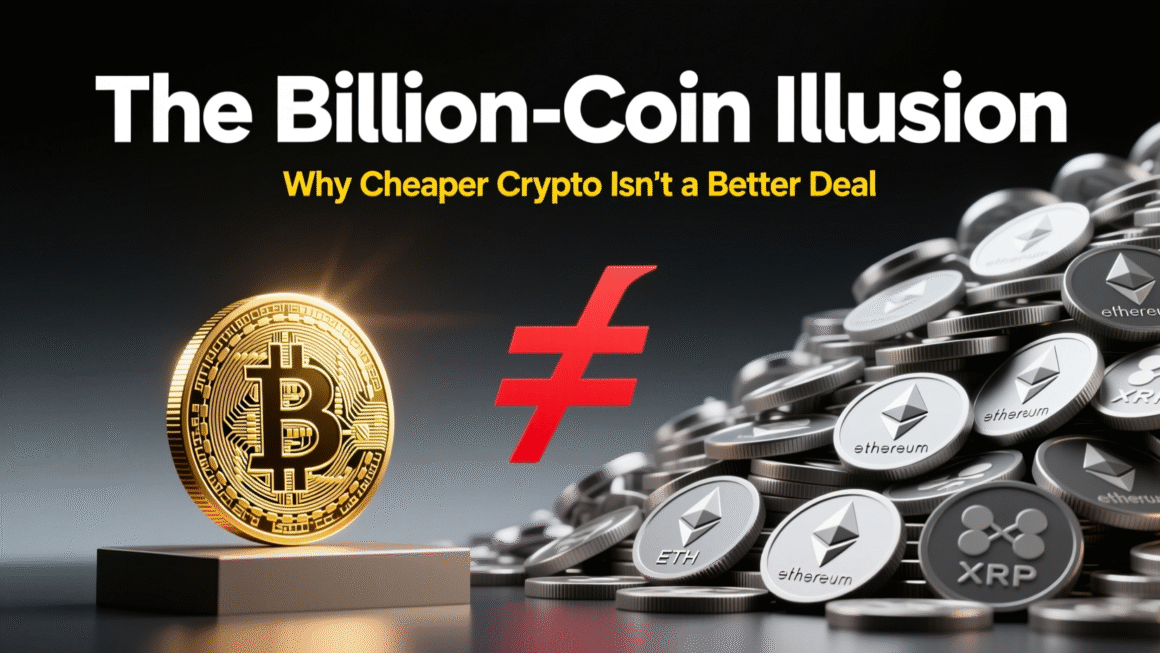









Bitcoin: The Complete Deep Dive Into Magic Internet Money
Today we’re diving straight into the digital labyrinth known as Bitcoin — the internet’s favorite magic internet money, the financial world’s rebellious teenager, and the reason your cousin insists he’s now a “crypto investor” after buying five dollars worth in twenty-twenty-one. You know the type. They won’t shut up about it at Thanksgiving dinner, even though they’ve checked the price exactly four hundred and seventy-three times this week and are currently down thirty percent.
But what is Bitcoin, really? How does it actually work? And why does everyone pretend they understand it when, statistically, they absolutely do not? Seriously, ask ten people to explain Bitcoin and you’ll get nine variations of “it’s like digital money but on computers” and one person who just starts yelling about the Federal Reserve.
Let’s break it down MatPat-style: fast, fun, and packed with the nerdy details that make this whole thing tick. No fluff, no crypto-bro hype, just the actual mechanics of how this revolutionary technology works and why it matters.
Bitcoin: The TL;DR Before the Deep Dive
Bitcoin is:
A digital currency — meaning it only exists as ones and zeros
Created in two thousand and eight — right after the financial crisis, which is definitely not a coincidence
With no banks, no governments, no physical coins — just pure code and mathematics
Running on something called blockchain — which we’ll explain without inducing a coma, promise
It’s money… but not the kind you can lose in your couch cushions — unless your couch is full of old hard drives, in which case you might be sitting on a fortune. There are literally stories of people who threw away hard drives containing thousands of Bitcoin back when they were worthless. Those hard drives are now worth millions. Somewhere in a landfill, there’s more wealth than some small countries possess. Wild, right?
The Mystery Creator (Because Every Good Lore Needs One)
Bitcoin was created by the legendary, mysterious, practically cryptid-tier figure known as Satoshi Nakamoto. And yes, before you ask, that’s almost certainly a pseudonym. Nobody names their kid Satoshi Nakamoto and then that kid just happens to invent digital currency. That would be like someone named Cash Money inventing banks.
Is Satoshi:
One person? Maybe a brilliant programmer working alone in a basement somewhere?
A group? Perhaps a team of cryptographers who decided collective anonymity was the move?
An alien? Okay, probably not, but can we rule it out completely?
Your weird coworker who never talks and types very fast? Look, we’re not saying it’s Dave from accounting, but we’re also not NOT saying it’s Dave from accounting.
A government agency running the longest con in history? Some people genuinely believe this.
No one knows. And people have tried to figure it out. Journalists have investigated. Researchers have analyzed writing patterns. The internet has created entire conspiracy theories. Some people have even claimed to be Satoshi themselves, and then been immediately debunked by people who actually understand the code.
Satoshi disappeared in two thousand and eleven, leaving behind a fully functional financial revolution like, “Welp, my work here is done,” and vanished like a ninja in the night. The last known communication was an email saying they had “moved on to other things.” Other things! Like what? What do you do after inventing a new form of money? Take up gardening? Learn the ukulele? We may never know.
The best part? Satoshi’s Bitcoin wallet — the original one — contains about one million Bitcoin. At current prices, that’s tens of billions of dollars, just sitting there. Untouched. Satoshi could be the richest person on Earth and has chosen to do absolutely nothing about it. That’s either the most disciplined person in history or someone who lost their password like the rest of us.
The Blockchain: The Star of the Show
Here’s where most explainer videos lose people — but not today. We’re going to make this make sense if it’s the last thing we do.
Blockchain = A Public Receipt That Never Forgets
Imagine you go to the store and buy chips. Normally, only you and the store know about this transaction. Your bank might know. The credit card company definitely knows. But Joe from across town? He has no idea about your chip-buying habits, and frankly, he doesn’t care.
But with Bitcoin, EVERYONE gets a copy of the receipt. Not just your receipt — every receipt. Every transaction. Ever. It’s all public.
That’s the blockchain:
A giant public ledger — think of it as a notebook that records every Bitcoin transaction ever made
Stored on thousands of computers — not in one place, but everywhere at once
Updating constantly — new transactions added every ten minutes or so
Impossible to erase — once something’s written, it’s permanent
Transparent — anyone can look at any transaction, though they won’t know it’s YOU specifically
It’s like if your bank statement was pinned to a global bulletin board — but without your name attached. Instead of “John Smith bought coffee,” it says “Wallet 1X7G9 sent point-zero-zero-five Bitcoin to Wallet 4K2M8.” Anonymous, but totally visible.
Why This Matters (And Why It’s Actually Genius)
In traditional banking, you trust the bank to keep accurate records. The bank says you have one thousand dollars, and you just have to believe them. If they make a mistake — or worse, if they’re corrupt — you’re kind of screwed. You might not even know until it’s too late.
With blockchain, there’s no single source of truth to corrupt. There are thousands of copies of the truth, all checking each other. If someone tries to cheat — tries to spend the same Bitcoin twice, or create fake transactions — the network catches it immediately. The majority rules. It’s democracy, but for money.
Think of it like this: if you told one friend you’d pay them back, they might remember wrong. But if you told one thousand friends, and they all wrote it down, and they all compared notes regularly? Yeah, you’re paying that money back. There’s no wiggle room. The blockchain remembers everything.
Blocks and Chains (The Name Finally Makes Sense)
Transactions don’t get added one at a time. They’re grouped into “blocks.” Each block contains a bunch of transactions — could be hundreds or thousands — all packaged together.
Then each block is connected to the one before it, forming a “chain.” Block one connects to block two connects to block three, all the way up to block number eight hundred thousand plus. It’s a chain of blocks. Blockchain. Mind. Blown.
But here’s the clever part: each block contains a reference to the previous block — like a cryptographic signature. Change anything in an old block, and that signature breaks. Every block after it becomes invalid. The whole chain notices. It’s like if you tried to edit page five of a book, but pages six through five hundred all had notes saying “page five should look exactly like THIS,” and they all started screaming if you changed it.
That’s why blockchain is so secure. To fake a transaction, you’d have to change not just one block, but every block after it, on thousands of computers, all at the same time. It’s basically impossible with current technology. You’d need more computing power than exists on Earth.
Mining: The Part Everyone Pretends to Understand
Mining sounds cool — like dwarves collecting gold in a magical cave, pickaxes glinting in torchlight, adventure music playing — but in reality, it’s computers doing high-powered Sudoku twenty-four seven in a warehouse in Iceland.
Here’s the deal:
What Miners Actually Do
Miners use big computers to solve math problems. Not fun math problems. Not “two plus two equals four” math problems. We’re talking about cryptographic puzzles so complex that even explaining them requires a computer science degree and a willingness to suffer.
The puzzle basically asks: “Find a random number that, when combined with all the transaction data in this block and run through a specific algorithm, produces a result that starts with a certain number of zeros.”
That’s it. That’s the puzzle. Find the magic number.
There’s no clever way to solve it. No shortcut. No formula. You just have to guess. Over and over and over. Billions of times per second. It’s like trying to guess someone’s password, except the password is sixty-four characters long and changes every time you guess wrong.
When they solve one, they get to add a new block of transactions to the blockchain. They bundle up all the pending transactions, slap their solution on it, and broadcast it to the network. Everyone checks the math, agrees it’s correct, and the block gets added to the chain.
As a reward, they earn new Bitcoin. Currently, it’s about six-point-two-five Bitcoin per block. At today’s prices, that’s hundreds of thousands of dollars. For solving math homework.
Boom. Money appears out of math. It’s the only time in history where doing really hard homework actually pays you thousands of dollars. Your teachers lied to you — showing your work CAN make you rich.
Why Mining Exists (Besides Making People Rich)
Mining serves two purposes:
First, it’s how new Bitcoin enters circulation. There’s no central bank printing more. Instead, miners create new Bitcoin by doing work — computational work, but still work. It’s like gold mining, but instead of digging holes in the ground, you’re running electricity through circuits.
Second, mining secures the network. All those miners competing to solve puzzles? They’re also validating transactions, making sure nobody’s cheating. The more miners there are, the more secure Bitcoin becomes. It’s security through competition.
The Difficulty Adjustment (Or: Why Bitcoin Is Self-Aware)
Here’s something wild: the puzzles automatically get harder or easier to keep block creation at roughly ten minutes.
Too many miners? Puzzle gets harder. Fewer miners? Puzzle gets easier. The network adjusts every two weeks based on how fast blocks were being created.
It’s like if a video game constantly changed difficulty to make sure you always took exactly ten minutes per level, no matter how good you got. Bitcoin is speed-running its own existence and adjusting the rules to keep it interesting.
The Energy Question (Yeah, We’re Going There)
Real talk: Bitcoin mining uses a LOT of electricity. Like, entire-country levels of electricity. We’re talking about the power consumption of Argentina or Sweden.
Critics say this is wasteful. Defenders say it’s securing a global financial network and is worth it. Some miners use renewable energy. Some use excess energy that would otherwise be wasted. Some just use whatever’s cheapest and don’t think about it too hard.
It’s complicated. But it’s definitely something to know about.
Why Does Bitcoin Have Value?
This is the question everyone asks, usually while squinting suspiciously. “But it’s not backed by anything!” they say. “It’s just code!”
Okay, sure. But also: what’s regular money backed by? Faith in the government. Collective agreement. The shared delusion that these pieces of paper or digital numbers in your bank account are worth something.
Bitcoin is the same thing, just without the government part.
Simple answer: People believe it has value.
Actual reasons include:
Limited supply (only twenty-one million will ever exist)
This is huge. Bitcoin has a hard cap. Once twenty-one million coins are mined — which will happen around the year twenty-one-forty — that’s it. No more. Ever. The code literally will not allow more to be created.
Compare that to regular money, where central banks can print more whenever they want. More money in circulation means each unit is worth less. It’s why your grandparents could buy a house for twelve dollars and a firm handshake.
Bitcoin can’t inflate like that. It’s deflationary by design. As more people want it and the supply stays fixed, the price goes up. Economics one-oh-one.
Decentralization (no government controlling it)
No single entity controls Bitcoin. Not a government, not a company, not even Satoshi. The network runs itself based on code and consensus.
This means:
Nobody can freeze your Bitcoin account
Nobody can stop you from sending Bitcoin to anyone, anywhere
Nobody can print more Bitcoin to bail out banks
Nobody can change the rules without the majority agreeing
For people in countries with unstable currencies or authoritarian governments, this is revolutionary. Your money is truly yours.
Global accessibility
Got internet? Congrats, you can use Bitcoin. Doesn’t matter if you’re in New York or Nigeria or a boat in the middle of the Pacific. The network doesn’t care.
There are billions of people without access to traditional banking — no bank account, no credit cards, nothing. But many have smartphones. Bitcoin gives them access to global finance for the first time.
Borderless money
Sending money internationally is normally expensive and slow. Banks charge fees. Services like Western Union take huge cuts. It might take days.
Bitcoin transfers settle in minutes and cost a few dollars regardless of amount. Sending ten dollars or ten million costs basically the same. That’s powerful.
Useful for storing wealth
Some people treat Bitcoin like digital gold — a way to store value long-term. “Digital gold” is actually Bitcoin’s nickname in the crypto world.
Gold has been valuable for thousands of years not because you can eat it or burn it for warmth, but because it’s rare, durable, and people agree it’s valuable. Bitcoin is the same, but you can send it through email.
Plus, it has main-character energy in the crypto world
Bitcoin was first. It’s the original. The OG. The standard. Every other cryptocurrency is compared to Bitcoin.
That network effect matters. More people know about Bitcoin than any other crypto. More businesses accept it. More infrastructure supports it. It’s the Coca-Cola of cryptocurrency — there are other sodas, but everyone knows Coke.
How You Actually Use Bitcoin (Without Becoming a Hacker)
Good news: You don’t need to mine anything or wear a hoodie in a dark room to interact with Bitcoin. You don’t need to understand cryptography or run a server farm. Using Bitcoin is actually pretty straightforward now.
You can:
Buy it on crypto exchanges — Websites like Coinbase, Kraken, or Binance let you exchange regular money for Bitcoin. It’s like using a currency exchange at the airport, but for digital money. Create an account, verify your identity (yeah, they check), link your bank account, and buy. Takes maybe ten minutes.
Store it in digital wallets — A wallet is basically an app that holds your Bitcoin. Could be on your phone, your computer, or even a special USB device called a hardware wallet. The wallet doesn’t actually store the Bitcoin (that’s on the blockchain), but it stores your private keys — the passwords that prove the Bitcoin is yours.
Send it to anyone worldwide in minutes — Got someone’s Bitcoin address? Paste it in, enter the amount, hit send. Done. They’ll have it before you finish your coffee. Doesn’t matter if they’re next door or in Tokyo.
Sell it like a normal asset — Changed your mind? Want to cash out? Go back to the exchange, sell your Bitcoin for regular money, transfer it to your bank. It’s not trapped in crypto-land forever.
It’s basically internet cash — but with fewer government rules and slightly more existential dread if you forget your password. Which brings us to…
The Password Situation (Or: Why You Should Write Things Down)
Here’s the thing about Bitcoin: if you lose your private key — your password — your Bitcoin is gone forever. Not “call customer service and reset it” gone. Actually gone. Permanently. Irretrievably.
There are no password recovery options. No “forgot my password” link. No tech support that can help. The Bitcoin is still on the blockchain, you just can’t access it. It’s like your money is in a vault and you threw away the only key.
Thousands of Bitcoin are lost this way. People who bought Bitcoin early, forgot about it, and then can’t remember their passwords. It’s tragic and hilarious in equal measure.
So: write down your recovery phrase. Keep it somewhere safe. Maybe even write it down twice. Don’t be the person with a hard drive full of Bitcoin sitting in a landfill.
Is Bitcoin Safe?
Short answer: The system? Very safe. Your own human decision-making? Questionable.
The Blockchain is Extremely Secure
The technology itself is rock-solid. In over fifteen years, the Bitcoin blockchain has never been hacked. The core protocol has never been compromised. No one has faked a transaction or created Bitcoin out of thin air.
That’s remarkable. Most computer systems get hacked eventually. Bitcoin has withstood attacks from governments, criminal organizations, and bored teenagers with too much time and computing power. It works.
But:
If you lose your wallet password, it’s gone forever — We covered this. Write. It. Down.
If you fall for scams, Bitcoin doesn’t come back — There’s no FDIC insurance. No fraud department. Send Bitcoin to a scammer, and that’s it. It’s gone. They’re probably on a beach somewhere laughing.
Price swings can be dramatic — Bitcoin’s price is volatile. And by volatile, I mean “your portfolio might drop thirty percent in a week and you’ll question every life decision that led you here.” It’s not for the faint of heart or people who check prices obsessively and panic.
Exchanges can get hacked — The blockchain is secure, but the exchanges where people buy and store Bitcoin? Not always. Mt. Gox. QuadrigaCX. FTX. The list of exchanges that failed or got hacked is long and depressing. Don’t keep all your Bitcoin on an exchange. If you’re holding long-term, move it to your own wallet.
Bitcoin is like riding a roller coaster designed by a genius mathematician who was also slightly unhinged. It’ll probably be fine. Probably. But it’s going to be a wild ride either way, and there’s a non-zero chance you’ll throw up.
Why Bitcoin Matters (Even If You Never Own Any)
Love it or hate it, Bitcoin changed everything. And I mean everything. The financial system will never be the same.
It introduced:
Decentralized money — For the first time in modern history, we have money that doesn’t depend on governments or banks. That’s huge. Revolutionary, even. Whether it succeeds long-term or not, the idea is out there now.
Trustless transactions — You don’t have to trust the other person. You don’t have to trust a bank. You trust the math and the code. The system works whether people are honest or not.
Digital scarcity — Before Bitcoin, digital items could be copied infinitely. MP3s, documents, images — copy-paste forever. Bitcoin proved you could have something digital that’s provably scarce. That concept opened doors nobody knew existed.
A new financial era — We’re watching the early days of a new type of economy. It’s messy and chaotic and full of scams and hype, but also innovation and potential. Future textbooks will have chapters about this.
It kicked off the entire crypto industry, NFTs, DeFi, Web Three, and also… a LOT of questionable investment advice on TikTok.
Bitcoin was the spark. Now there are thousands of cryptocurrencies. Some trying to be better versions of Bitcoin. Some trying to do completely different things. Some are legitimate projects. Some are obvious scams. Most fall somewhere in between.
Would we have NFTs without Bitcoin? Nope. Decentralized finance? No way. The entire blockchain industry? Doesn’t exist.
For better or worse, Bitcoin started a revolution. And revolutions are always messy.
Final Thoughts
Bitcoin isn’t magic money. It’s not pixie dust and wishes. There’s no wizard behind the curtain making it work.
It isn’t a scam. Say what you want about the crypto industry — and there are plenty of scams in the crypto industry — but Bitcoin itself isn’t one. It’s open-source code that does exactly what it says it does.
It isn’t a guaranteed get-rich machine. Despite what your cousin or that guy on Twitter with laser eyes claims. Yes, some people got rich. Some people got rich from Beanie Babies too. Past performance doesn’t guarantee future results, as every financial disclaimer ever written will tell you.
It’s a technology — a clever one — that reimagines what money could be in a world that’s always online. A world where borders matter less. Where people don’t trust institutions as much as they used to. Where code and mathematics might be more reliable than human promises.
And whether you think it’s the future of finance or a very elaborate nerd experiment that got out of hand, one thing is obvious:
Bitcoin isn’t going anywhere.
It’s survived governments trying to ban it. Market crashes that would kill normal companies. Countless obituaries declaring it dead. Technological challenges. Scaling issues. Controversy after controversy.
And it’s still here. Still running. Still processing transactions every ten minutes like clockwork.
So maybe learn about it. You don’t have to buy any. You don’t have to like it. But understanding Bitcoin means understanding a huge shift in how humans think about money, value, and trust.
And that’s worth knowing about — even if you never own a single Satoshi.